
Caustic soda, also known as sodium hydroxide (NaOH), is one of the most widely used industrial chemicals across South Africa's mining, manufacturing, water treatment, and chemical processing sectors. As a strong alkaline compound, it plays a critical role in mineral extraction, pH adjustment, pulp and paper production, chemical synthesis, and wastewater neutralization. For businesses requiring reliable bulk chemical supply, selecting the right caustic soda supplier in South Africa involves evaluating product quality, form availability, supplier reliability, logistics capabilities, and compliance with national safety standards.
Understanding Caustic Soda and Its Industrial Importance
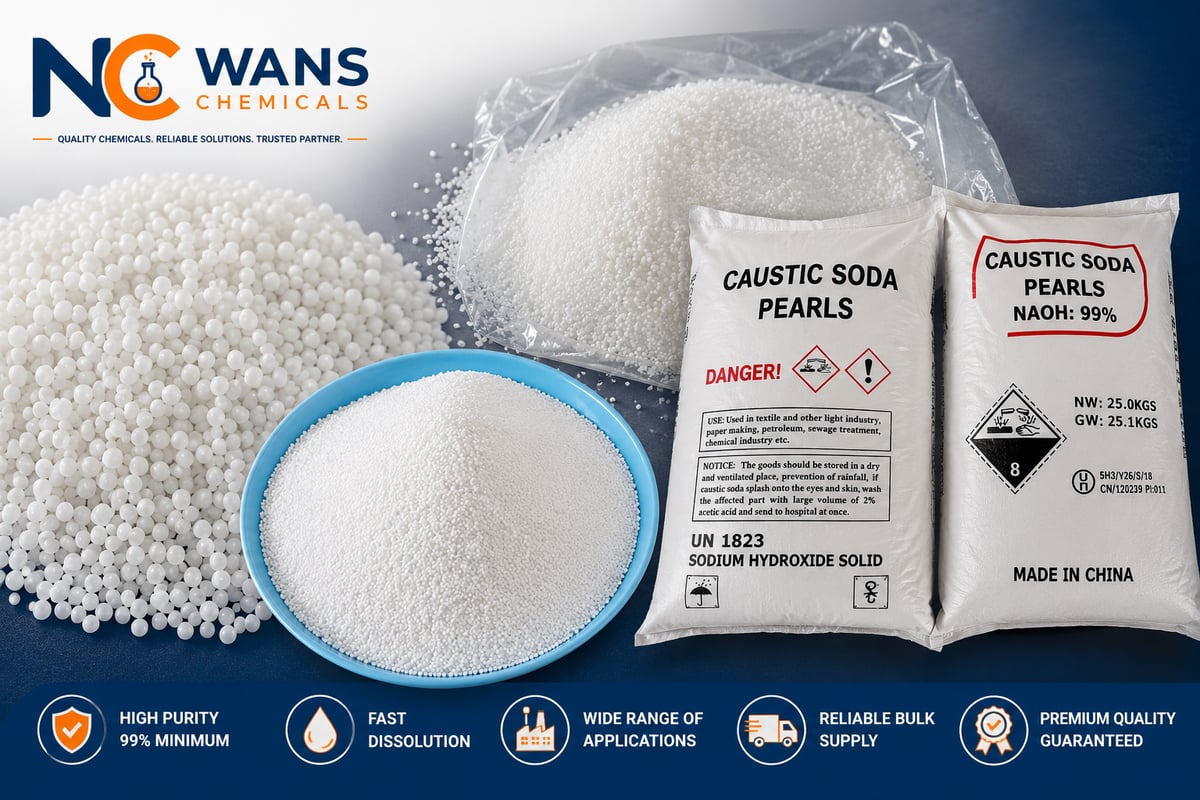
Caustic soda is a highly alkaline inorganic compound used primarily to increase pH levels, neutralize acids, and facilitate chemical reactions in industrial processes. Available in three main forms-flakes, pearls, and liquid lye-sodium hydroxide is manufactured through the electrolysis of brine (sodium chloride solution) using membrane cell, diaphragm cell, or mercury cell technology.
Key Properties and Specifications
Industrial-grade caustic soda typically meets the following specifications:
| Property | Flakes/Pearls | Liquid Lye (50%) |
|---|---|---|
| NaOH content | 98-99% | 49-51% |
| Sodium carbonate | ≤ 0.8% | ≤ 1.0% |
| Sodium chloride | ≤ 0.05% | ≤ 0.1% |
| Iron (Fe) | ≤ 5 ppm | ≤ 10 ppm |
These specifications ensure the product performs consistently across applications and meets the stringent requirements of mining, water treatment, and chemical manufacturing operations. According to the International Chemical Safety Card for sodium hydroxide, proper handling and storage protocols are essential due to its corrosive nature and reactivity with acids and certain metals.
Market Dynamics in South Africa
South Africa's caustic soda market is driven by demand from multiple industrial sectors. The Chemical and Allied Industries Association (CAIA) represents key manufacturers and distributors who serve this demand through domestic production and strategic imports. Recent market analysis from Reed Intelligence indicates steady growth in consumption, particularly in mining and water treatment applications, with increasing demand for reliable bulk supply solutions.
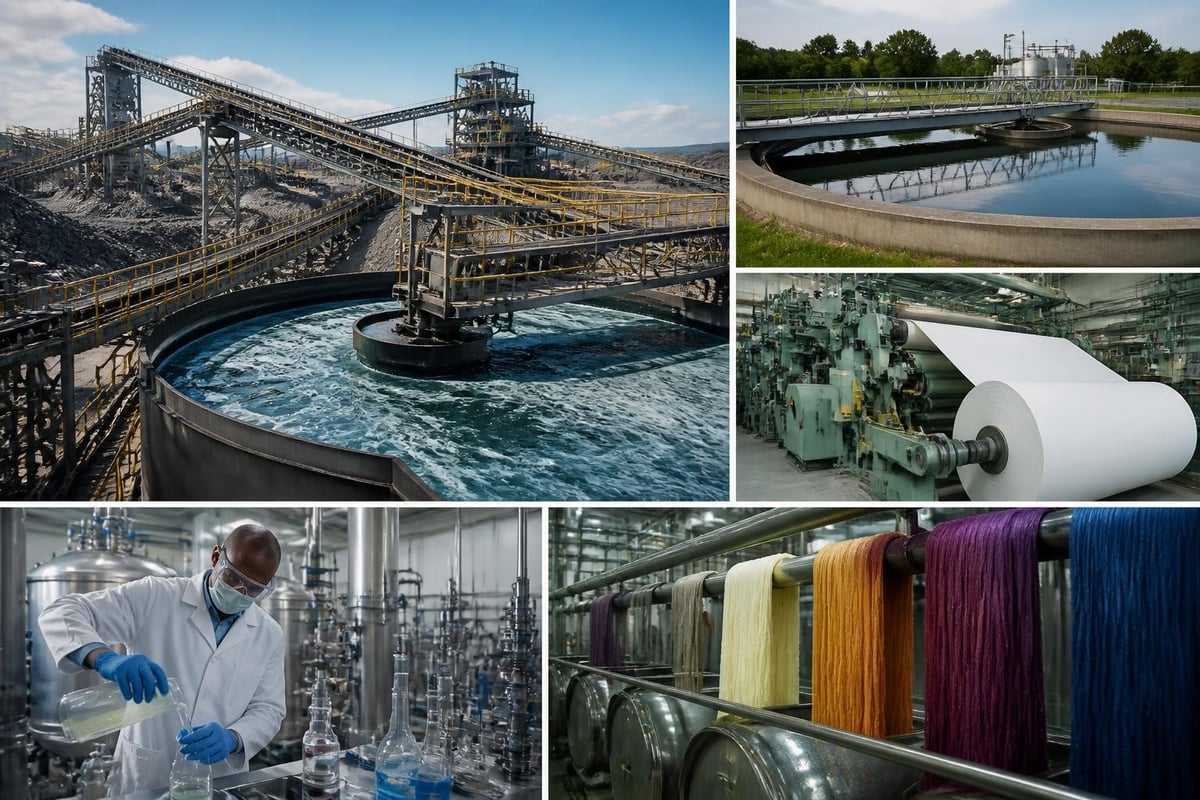
Primary Applications Across South African Industries
Mining and Mineral Processing
The mining sector represents the largest consumer of caustic soda in South Africa. In gold and base metal extraction, sodium hydroxide serves multiple critical functions:
- pH regulation in flotation circuits to optimize mineral recovery
- Cyanide detoxification in tailings treatment and environmental compliance
- Alumina extraction through the Bayer process for aluminum production
- Reagent preparation and conditioning of slurries
The International Aluminium Institute technical guidance highlights caustic soda's essential role in dissolving aluminum hydroxide from bauxite ore, requiring consistent high-purity product and reliable delivery schedules to maintain continuous operations.
Mining operations typically require caustic soda in liquid form for ease of handling and dosing, though flakes and pearls are preferred for sites with limited liquid storage infrastructure. Establishing a partnership with a dependable caustic soda supplier in South Africa ensures uninterrupted supply to critical extraction processes.
Water and Wastewater Treatment
Municipal water treatment facilities and industrial wastewater operations use caustic soda for:
- pH adjustment and alkalinity control in potable water production
- Neutralization of acidic industrial effluent streams
- Precipitation of heavy metals in wastewater treatment
- Regeneration of ion exchange resins in water softening systems
Water treatment applications demand precise dosing and consistent product quality to maintain compliance with drinking water standards and environmental discharge permits. Many facilities source industrial chemicals from local suppliers to minimize logistics complexity and ensure rapid response to sudden demand changes.
Chemical Manufacturing and Processing
Caustic soda serves as a fundamental raw material in chemical synthesis, including:
- Production of sodium salts and organic chemicals
- Soap and detergent manufacturing through saponification
- Petroleum refining and petrochemical processing
- Pharmaceutical intermediate synthesis
Chemical manufacturers prioritize supplier consistency, technical support, and documentation to meet their own quality management systems and customer specifications.
Evaluating Caustic Soda Supplier Selection Criteria
Choosing the right caustic soda supplier in South Africa requires assessment across multiple dimensions beyond unit price. Procurement managers and operations teams should evaluate potential suppliers using a structured approach.
Product Quality and Consistency
Specification compliance is non-negotiable. Request certificates of analysis (COA) for recent batches showing:
- NaOH content and impurity levels
- Heavy metal content (particularly iron and mercury)
- Batch-to-batch consistency data
- Compliance with relevant standards (e.g., SANS, ASTM, or equivalent)
Quality management certification such as ISO 9001 indicates systematic quality control processes. Suppliers with established quality systems typically maintain better traceability and problem-resolution capabilities.
Form and Packaging Options
Different applications require different product forms:
| Form | Advantages | Typical Applications |
|---|---|---|
| Flakes | Easy handling, long storage stability, lower freight cost | Mining pH control, chemical manufacturing, small-scale operations |
| Pearls | Minimal dust, easier dissolution, uniform particle size | Water treatment, detergent production, controlled dosing |
| Liquid Lye | Ready to use, precise dosing, automated systems | Large-scale water treatment, continuous mining operations, high-volume users |
Packaging flexibility matters for cost optimization. Bulk deliveries in tankers (for liquid) or jumbo bags (for solids) reduce per-unit costs for high-volume users, while smaller quantities in 25 kg bags suit operations with limited storage or diverse chemical needs.
For businesses seeking consistent quality in various forms, suppliers like Nwans Chemicals offer caustic soda in flakes, pearls, and liquid lye with bulk supply capabilities and reliable delivery across South Africa.
Supply Reliability and Inventory Management
Stock availability and safety inventory levels prevent production disruptions. Ask potential suppliers:
- What minimum stock levels do you maintain?
- What are your lead times for standard and urgent orders?
- Do you have backup supply arrangements for supply chain disruptions?
- Can you provide vendor-managed inventory (VMI) solutions?
A reliable caustic soda supplier in South Africa should demonstrate consistent on-time delivery performance and proactive communication about potential supply constraints.

Regulatory Compliance and Safety Documentation
South African regulations classify sodium hydroxide as a hazardous substance requiring specific handling, storage, and transport protocols. The Occupational Health and Safety Act regulations for hazardous chemical agents mandate suppliers and users to implement appropriate risk management measures.
Compliant suppliers provide:
- Safety Data Sheets (SDS) in current format with South African emergency contact information
- Transport documentation complying with UN 1823 (liquid) or UN 1824 (solid) specifications
- Hazard classification labels and handling instructions
- Emergency response guidance and spillage procedures
Documentation completeness reflects supplier professionalism and reduces your organization's regulatory risk.
Technical Support and Application Expertise
Suppliers with technical knowledge can assist with:
- Product selection for specific applications
- Dosing calculation and optimization
- Troubleshooting operational issues
- Process improvement recommendations
This expertise proves particularly valuable when scaling operations, modifying processes, or addressing unexpected performance issues.
Pricing Considerations and Total Cost of Ownership
While unit price per kilogram or liter is important, total cost of ownership (TCO) provides better supplier comparison. Consider these factors:
Price Components and Market Factors
Caustic soda pricing in South Africa reflects several variables:
- Global caustic-chlorine market dynamics affect imported product costs
- Energy costs in electrolytic production influence manufacturer pricing
- Transportation and logistics vary by distance and delivery method
- Currency fluctuations impact imported product competitiveness
- Order volume determines available discounts and pricing tiers
According to market analysis from GTAI, South Africa imports significant quantities of caustic soda to supplement domestic production, making exchange rates and global supply conditions relevant to local pricing.
Volume Discounts and Contract Structures
Most suppliers offer tiered pricing:
- Spot purchase pricing for immediate needs
- Volume discounts for larger single orders
- Contract pricing for committed annual volumes
- Framework agreements with call-off flexibility
Long-term supply agreements can secure favorable pricing and supply priority during market tightness, particularly for large-volume users in mining and manufacturing.
Hidden Costs and Efficiency Factors
Look beyond the purchase price to evaluate:
- Freight and delivery charges (included vs. ex-works pricing)
- Product losses from poor packaging or handling
- Storage requirements (liquid lye needs specialized tanks; solids need moisture protection)
- Dissolution time and labor (pearls dissolve faster than flakes)
- Waste disposal costs for packaging materials
These factors significantly impact TCO, especially for high-volume operations.
Logistics, Delivery, and Storage Considerations
Efficient logistics are crucial for maintaining continuous operations and managing working capital.
Delivery Capabilities and Geographic Coverage
Evaluate supplier delivery infrastructure:
- Fleet ownership vs. third-party logistics partnerships
- Geographic coverage across South African provinces
- Cross-border delivery capabilities for regional operations
- Delivery scheduling flexibility and minimum order quantities
- Emergency delivery options for unplanned requirements
Suppliers with established chemical sourcing networks typically offer more flexible logistics solutions and faster response to urgent needs.
Storage and Handling Requirements
Proper storage maintains product quality and workplace safety:
Solid caustic soda (flakes and pearls) requires:
- Dry, well-ventilated storage away from acids and moisture
- Moisture-proof packaging to prevent clumping and degradation
- Ambient temperature conditions (excessive heat accelerates packaging degradation)
- Segregation from incompatible materials
Liquid caustic soda (lye) requires:
- Specialized storage tanks (carbon steel or stainless steel)
- Heating systems for cold climates (freezing point varies with concentration)
- Secondary containment for spill protection
- Closed systems to minimize carbon dioxide absorption
Your supplier should provide storage and handling guidance specific to your site conditions.
Transportation Safety and Compliance
Caustic soda transport follows strict safety protocols:
- Proper vehicle placarding and UN number display
- Driver training in hazardous material handling
- Emergency equipment on transport vehicles
- Route planning to minimize public exposure
- Compliance with national road transport regulations
Reputable suppliers maintain comprehensive safety programs and provide transport documentation to support your receiving and inventory procedures.
Building Supplier Partnerships for Long-Term Success
Performance Monitoring and Continuous Improvement
Establish key performance indicators (KPIs) to track supplier performance:
| KPI | Target | Measurement Frequency |
|---|---|---|
| On-time delivery | ≥ 95% | Monthly |
| Product quality compliance | 100% | Per batch/delivery |
| Documentation accuracy | 100% | Per delivery |
| Emergency response time | ≤ 24 hours | As needed |
| Technical support responsiveness | ≤ 48 hours | Per request |
Regular performance reviews with your caustic soda supplier in South Africa identify improvement opportunities and strengthen the partnership.
Risk Management and Business Continuity
Minimize supply risk through:
- Dual sourcing for critical high-volume requirements
- Safety stock calibrated to lead times and usage variability
- Contractual supply guarantees with defined remedies for non-performance
- Regular supplier audits to verify capabilities and compliance
- Alternative product forms as backup options (e.g., flakes if liquid supply is constrained)
Proactive risk management prevents costly production disruptions and maintains operational continuity.
Collaborative Forecasting and Planning
Share demand forecasts with your supplier to enable:
- Optimal inventory positioning
- Capacity planning for peak periods
- Advance procurement of raw materials
- Logistics optimization and cost reduction
- New product development or specification changes
Transparent communication builds trust and enables suppliers to serve your needs more effectively.

Common Questions from Industrial Buyers
What is the typical shelf life of caustic soda?
Properly stored solid caustic soda (flakes or pearls) remains stable for several years. Liquid caustic soda has an indefinite shelf life when stored in appropriate tanks, though concentration may change slightly over time due to carbon dioxide absorption from air exposure.
Can I mix different caustic soda forms in my process?
Yes, flakes, pearls, and liquid lye all provide sodium hydroxide and can be substituted based on equivalent NaOH content. However, switching between forms requires adjusting dissolution procedures, dosing equipment, and handling protocols. Consult your supplier for application-specific guidance.
How does caustic soda quality affect water treatment performance?
Impurities in lower-grade caustic soda can contribute to water quality issues. For potable water applications, food-grade or high-purity caustic soda minimizes introduction of contaminants like heavy metals or organics that could affect taste, odor, or regulatory compliance.
What minimum order quantities do suppliers typically require?
Minimum order quantities vary by supplier and delivery location. Liquid caustic soda tanker deliveries typically start at 20,000-30,000 liters. Solid caustic soda may be available in pallet quantities (1,000 kg) for smaller users or full truck loads (20-25 tonnes) for larger operations.
How do I calculate the right dosage for my application?
Dosage calculation depends on your specific application, water chemistry, and target pH. A general approach involves:
- Determine the volume of solution requiring treatment
- Measure current and target pH levels
- Calculate required alkalinity increase
- Apply stoichiometric calculations based on NaOH molecular weight
- Account for product purity (e.g., 98% vs. 50%)
Request technical support from your caustic soda supplier in South Africa for application-specific dosage guidance. Many suppliers offer water treatment chemical expertise to help optimize chemical programs.
What safety equipment is required for handling caustic soda?
Personal protective equipment (PPE) for caustic soda handling includes:
- Chemical-resistant gloves (neoprene, nitrile, or butyl rubber)
- Safety goggles or face shield
- Chemical-resistant apron or coveralls
- Closed-toe safety boots
- Respiratory protection for dust (solids) or mist (liquids) exposure
Workplace safety showers and eyewash stations must be available within 10 meters of handling areas. Refer to supplier SDS for complete safety requirements.
Documentation and Quality Assurance
Essential Documentation for Procurement
Maintain complete records for quality, regulatory, and audit purposes:
- Purchase orders with detailed specifications
- Certificates of analysis for each batch or delivery
- Safety Data Sheets (current versions)
- Transport documentation and delivery notes
- Storage and handling procedures
- Incident reports for any quality or safety issues
This documentation demonstrates due diligence and supports regulatory compliance during inspections or audits.
Supplier Audit and Qualification
For critical applications, consider on-site supplier audits evaluating:
- Manufacturing or distribution facility conditions
- Quality control laboratory capabilities and procedures
- Inventory management and product traceability systems
- Health, safety, and environmental management
- Financial stability and business continuity planning
Qualified suppliers demonstrate commitment to professional standards and long-term relationship building.
Selecting a reliable caustic soda supplier in South Africa requires evaluating product quality, supply reliability, logistics capabilities, and regulatory compliance alongside competitive pricing. By focusing on total cost of ownership and building collaborative supplier partnerships, industrial buyers secure consistent access to this essential chemical while minimizing operational and financial risks. Nwans Chemicals provides comprehensive caustic soda supply solutions in flakes, pearls, and liquid lye forms, backed by quality documentation, bulk availability, and reliable delivery across South Africa and international markets. Contact our team today to discuss your sodium hydroxide requirements and receive a detailed quotation tailored to your operational needs.
Leave A Comment