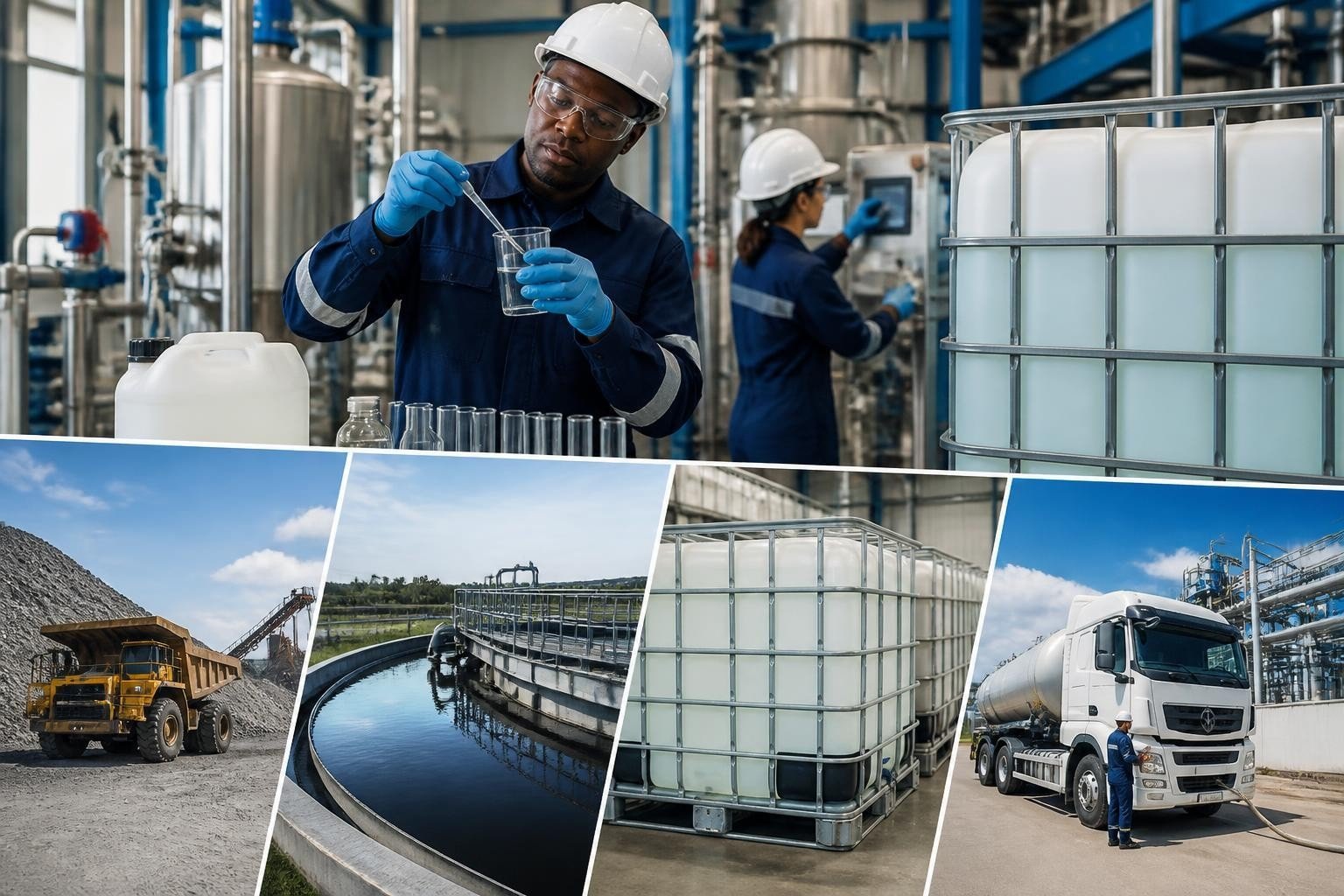
Hydrogen peroxide remains one of the most versatile and widely used industrial chemicals across mining, water treatment, manufacturing, pulp and paper, and chemical processing sectors. Understanding the landscape of hydrogen peroxide producers, their manufacturing processes, quality standards, and supply chain capabilities is essential for procurement managers, industrial buyers, and operations teams sourcing this critical chemical. With growing demand across Africa and South Africa specifically, businesses require reliable information about production methods, industrial grades, bulk supply options, and the factors that distinguish reputable producers from commodity suppliers.
Understanding Hydrogen Peroxide Production Methods
Hydrogen peroxide producers utilize several manufacturing processes to create this powerful oxidizing agent. The dominant industrial method remains the anthraquinone oxidation process, which accounts for approximately 95% of global production capacity. This multi-step process involves the hydrogenation of an alkyl-anthraquinone to the corresponding hydroquinone, followed by oxidation with air to produce hydrogen peroxide and regenerate the anthraquinone.
The Anthraquinone Process
Major hydrogen peroxide producers favor the anthraquinone process because it delivers high-purity product at industrial scale with excellent economics. The process operates continuously, producing hydrogen peroxide concentrations typically between 30% and 70% by weight, which are then either sold directly or further concentrated to higher grades.
Key advantages include:
- Continuous operation with minimal downtime
- High selectivity and conversion rates
- Proven reliability at commercial scale
- Established catalyst and solvent systems
- Lower production costs per ton
The working solution circulates through hydrogenation reactors, oxidation towers, extraction columns, and purification stages. Producers invest heavily in optimizing catalyst performance, solvent recovery, and energy efficiency to maintain competitive positioning.
Alternative Production Technologies
Emerging hydrogen peroxide producers are exploring alternative routes, including electrochemical synthesis and direct synthesis from hydrogen and oxygen. Research into electrosynthesis of hydrogen peroxide shows promise for distributed production models, particularly for on-site generation at user facilities.
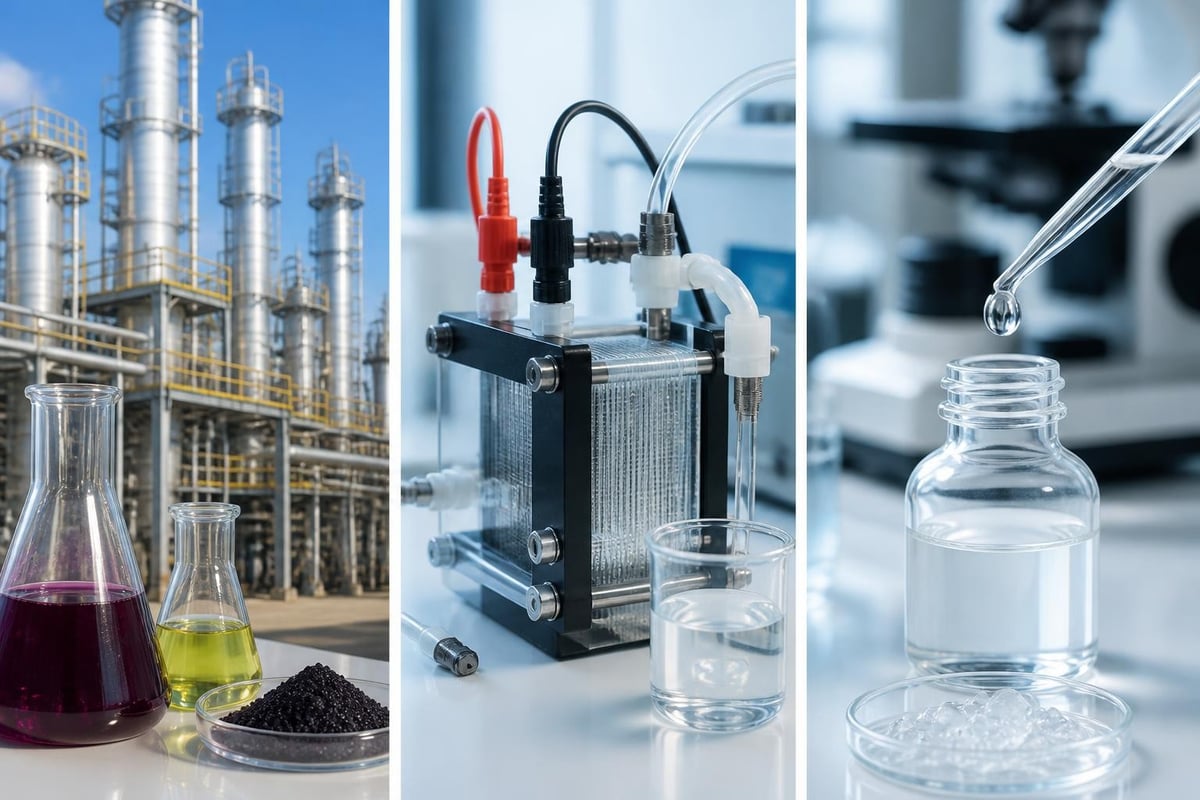
Direct synthesis methods combine hydrogen and oxygen over precious metal catalysts to produce hydrogen peroxide. While technically simpler than the anthraquinone process, safety concerns around handling explosive H2/O2 mixtures and challenges achieving high selectivity have limited commercial adoption. However, several producers continue developing safer reactor designs and improved catalyst systems.
Industrial Grades and Concentrations From Producers
Hydrogen peroxide producers manufacture multiple grades and concentrations to serve different industrial applications. Understanding these specifications helps procurement teams select the appropriate product for their specific requirements.
| Grade | Concentration | Primary Applications | Stability Requirements |
|---|---|---|---|
| Standard Industrial | 35% | Mining, pulp bleaching, wastewater | Stabilizers required |
| High Purity | 50% – 70% | Electronics, aerospace, specialty | Ultra-pure, minimal metals |
| Food Grade | 35% – 50% | Food processing, aseptic packaging | FDA/food safety compliance |
| Technical | 30% – 35% | Water treatment, chemical synthesis | Standard industrial purity |
Concentration and Stabilization
Producers typically manufacture hydrogen peroxide at concentrations between 30% and 70%, with 35% and 50% being the most common commercial grades. Higher concentrations reduce shipping costs and storage volumes but require more stringent handling protocols and specialized containers.
All producers add stabilizers to prevent decomposition during storage and transport. Common stabilizers include sodium stannate, phosphoric acid, and organic phosphonates. The stabilizer package varies based on end-use application, with ultra-pure grades requiring minimal or specialized additives.
Decomposition factors producers control:
- Trace metal contamination (iron, copper, chromium)
- pH levels (optimal stability typically pH 3-4)
- Temperature during storage and transport
- Exposure to light and organic contaminants
- Container material compatibility
Major Hydrogen Peroxide Producers Globally
The global hydrogen peroxide production landscape is dominated by several major chemical manufacturers with facilities across multiple continents. Understanding producer locations, capacities, and market presence helps buyers assess supply security and logistics options.
Leading Global Producers
Evonik Industries operates multiple production facilities worldwide and ranks among the top three hydrogen peroxide producers globally. The company's plants utilize advanced anthraquinone technology with integrated logistics networks serving mining, pulp and paper, and chemical manufacturing sectors.
Solvay maintains significant production capacity across Europe, Asia, and the Americas. Their hydrogen peroxide business includes both commodity and specialty grades, with particular strength in electronics and semiconductor applications requiring ultra-high purity.
Arkema produces hydrogen peroxide at several locations, focusing on integrated production with downstream derivatives. Their facilities serve regional markets with tailored logistics solutions including bulk tankers, ISO containers, and drummed product.
Other significant producers include Mitsubishi Gas Chemical, Kemira, and OCI Chemical, each with regional strengths and specialized market segments. Asian producers have expanded capacity substantially over the past decade, particularly in China and Southeast Asia, to serve growing regional demand.
Regional Production in Africa
South Africa hosts limited domestic hydrogen peroxide production, with most supply imported from European and Asian producers. This creates opportunities for regional production development but also means buyers currently rely on international supply chains and distributor networks like Nwans Chemicals for reliable sourcing.
Bulk Supply and Packaging Options
Hydrogen peroxide producers offer various packaging and delivery methods to accommodate different customer volumes and handling capabilities. Bulk supply economics and logistics significantly impact total cost of ownership for industrial users.
Bulk Transportation Methods
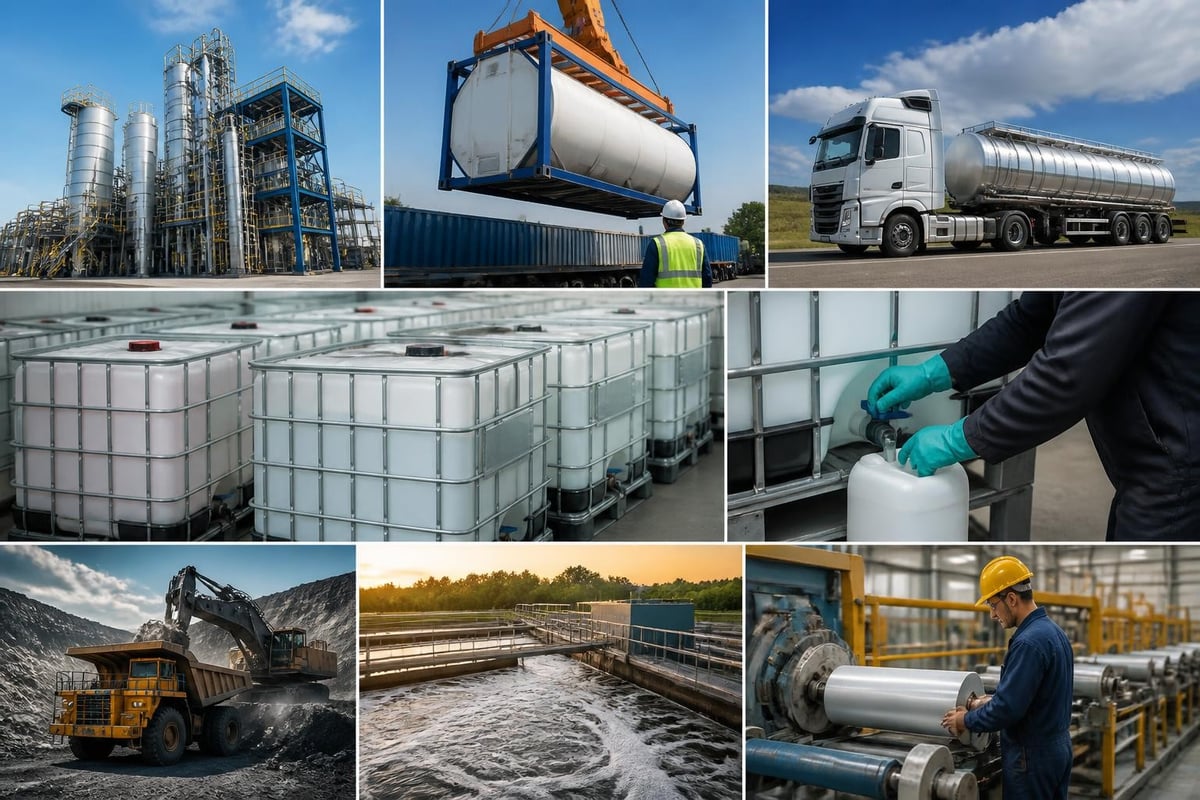
ISO tank containers represent the most common method for international shipment, with typical capacities of 20,000 to 26,000 liters. Producers use specialized containers with appropriate gasket materials and venting systems to safely transport hydrogen peroxide across continents.
Road tankers serve regional distribution, delivering 15,000 to 30,000 liters directly to customer facilities with storage tanks. This method works well for high-volume users who maintain on-site inventory and have proper receiving infrastructure.
Intermediate Bulk Containers (IBCs) provide a flexible middle option, typically in 1,000-liter capacities. Producers supply IBCs for customers requiring regular deliveries without dedicated storage tanks. The containers are returnable or single-use depending on customer preference and logistics economics.
- Drums (200-220 liters): Standard packaging for moderate volumes
- Jerrycans (20-25 liters): Small-scale or laboratory use
- Bulk storage tanks: Customer-owned assets for high-volume continuous use
Producers work closely with logistics partners to ensure proper handling throughout the supply chain. Temperature control during transport is essential, as hydrogen peroxide decomposition accelerates above 30°C.
Quality Standards and Documentation
Reputable hydrogen peroxide producers maintain rigorous quality control systems and provide comprehensive documentation to support customer compliance requirements. Quality assurance extends from raw material sourcing through production, storage, and final delivery.
Production Quality Control
Producers implement multiple testing points throughout manufacturing:
Raw material verification ensures anthraquinone derivatives, solvents, and catalysts meet specifications before entering the process. In-process monitoring tracks conversion efficiency, purity levels, and contamination throughout the production cycle. Final product testing confirms concentration, stabilizer levels, residual impurities, and physical properties before release.
Most hydrogen peroxide producers operate under ISO 9001 quality management systems, with many also certified to ISO 14001 for environmental management. Facilities serving food, pharmaceutical, or electronics sectors typically hold additional certifications such as FSSC 22000 or semiconductor industry standards.
Certificate of Analysis and Technical Data
Each shipment from established producers includes a Certificate of Analysis (CoA) documenting:
- Actual concentration (assay)
- Residual stabilizers
- Heavy metal content
- pH value
- Appearance and color
- Free acid levels
- Evaporation residue
Technical data sheets provide handling recommendations, safety information, typical specifications, and application guidance. Material Safety Data Sheets (MSDS/SDS) comply with GHS standards and regional regulations.
Pricing Factors and Market Dynamics
Hydrogen peroxide pricing from producers reflects raw material costs, energy inputs, production capacity utilization, logistics expenses, and regional supply-demand balances. Understanding these factors helps procurement teams negotiate effectively and plan budgets.
Raw Material and Energy Costs
The anthraquinone process requires specific organic chemicals, catalysts, and significant energy for hydrogenation, separation, and purification stages. Producers face cost pressure when electricity, natural gas, or hydrogen feedstock prices increase.
Major cost components include:
- Anthraquinone derivatives and working solutions
- Hydrogen for the hydrogenation reaction
- Catalysts (palladium, nickel)
- Energy for reactors, separators, and concentration
- Solvents and solvent recovery systems
- Packaging and stabilizers
| Cost Factor | Impact on Price | Typical Variation |
|---|---|---|
| Energy costs | High | ±15-25% annually |
| Raw materials | Moderate | ±10-15% annually |
| Logistics | Moderate-High | ±20-30% (distance dependent) |
| Currency fluctuation | Variable | ±10-20% (import markets) |
Regional Price Variations
Hydrogen peroxide prices vary significantly by region based on local production capacity, import duties, logistics costs, and market competition. South African buyers typically pay premium pricing compared to European or Asian markets due to import logistics and smaller market volumes.
Bulk buyers negotiating directly with producers or established distributors secure better pricing than spot market purchases. Contract agreements with volume commitments typically deliver 10-20% cost savings compared to ad-hoc purchasing.
Supplier Reliability and Service Capabilities
Beyond product quality and pricing, hydrogen peroxide producers differentiate themselves through supply reliability, technical support, and service capabilities. Industrial buyers prioritize suppliers who understand their applications and can ensure consistent availability.
Supply Chain Resilience
Leading producers maintain multiple manufacturing sites, creating redundancy in case of production disruptions. They also hold strategic inventory at regional distribution centers to buffer demand fluctuations and supply chain delays.
Reliability indicators include:
- Production capacity across multiple facilities
- Regional inventory and distribution networks
- Established logistics partnerships
- Track record of on-time deliveries
- Responsive technical support teams
- Flexibility for urgent orders
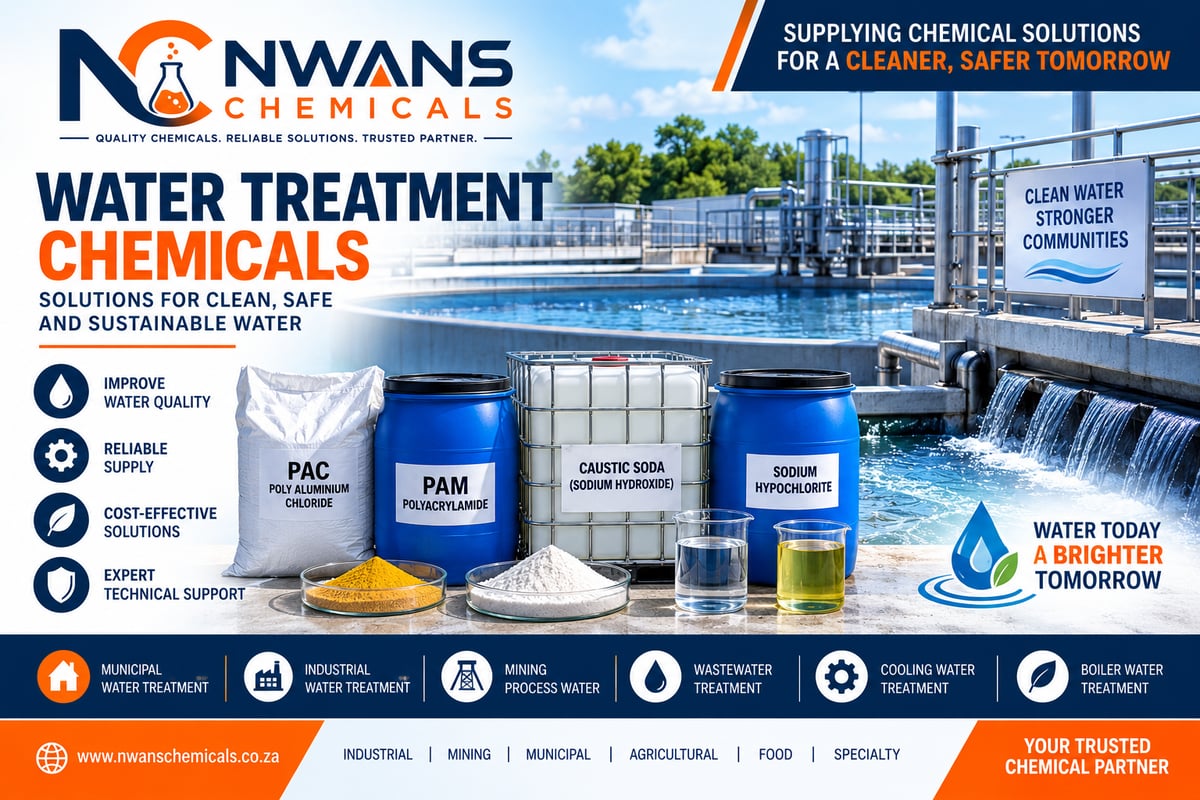
Producers serving critical industries like water treatment develop contingency plans including alternative shipping routes, emergency inventory reserves, and prioritized allocation during tight supply periods. For water treatment applications requiring dependable chemical supply, partnering with established distributors who maintain relationships with multiple producers provides additional security. Companies like Nwans Chemicals work with trusted manufacturers to ensure consistent availability for critical applications.
Technical Service and Application Support
Experienced hydrogen peroxide producers employ technical service teams who assist customers with application optimization, safety protocols, and troubleshooting. This support proves particularly valuable for new applications or when scaling up processes.
Technical services may include:
- Dosing calculations and equipment recommendations
- Compatibility testing with other process chemicals
- Safety training and handling procedures
- Process optimization to reduce consumption
- Regulatory compliance assistance
Emerging Trends in Hydrogen Peroxide Production
The hydrogen peroxide industry continues evolving with new production technologies, sustainability initiatives, and application development. Understanding these trends helps buyers anticipate future supply dynamics and opportunities.
On-Site Generation Systems
Several technology providers now offer on-site hydrogen peroxide generation systems for large-volume users. These systems produce hydrogen peroxide directly at the point of use through electrochemical methods, eliminating transportation and storage of concentrated product.
Research into sustainable H2O2 production via oxygen reduction explores catalyst design improvements that could make distributed production more economically viable. While currently limited to specific applications and scales, on-site generation may reshape the producer-customer relationship for certain market segments.
Sustainability and Green Chemistry
Environmental considerations drive innovation among hydrogen peroxide producers. Companies invest in renewable energy for production facilities, solvent recovery optimization, and waste minimization to reduce their carbon footprint.
Hydrogen peroxide itself serves as a "green" oxidant in many applications, decomposing to water and oxygen without persistent residues. Producers emphasize these environmental benefits when marketing to industries prioritizing sustainable chemistry and reduced environmental impact.
Production Efficiency Improvements
Continuous improvement in catalyst technology, process control, and energy integration enhances producer competitiveness. Advanced process control systems optimize reaction conditions in real-time, increasing yield and reducing energy consumption per ton of product.
Some producers explore integration with renewable hydrogen production, potentially lowering the carbon intensity of the anthraquinone process or enabling more economical direct synthesis routes. Photocatalytic and electrocatalytic H2O2 generation research continues advancing, though commercial implementation remains limited.
Frequently Asked Questions
What are the main industrial uses of hydrogen peroxide?
Hydrogen peroxide serves as an oxidizing agent, bleaching agent, and disinfectant across multiple industries. In mining, it's used for mineral processing and cyanide destruction. Water treatment facilities employ hydrogen peroxide for advanced oxidation processes, odor control, and disinfection. The pulp and paper industry uses it for bleaching wood pulp. Chemical manufacturing applies hydrogen peroxide in synthesis reactions and wastewater treatment. Food processing facilities utilize food-grade hydrogen peroxide for aseptic packaging and surface sanitization.
How do I choose a reliable hydrogen peroxide supplier?
Evaluate suppliers based on product quality consistency, technical documentation, supply reliability, safety records, and service capabilities. Request certificates of analysis for recent shipments to verify specifications. Assess their logistics network and ability to meet your delivery schedules. Check references from similar industrial customers. Consider whether they offer technical support for your specific application. Verify their safety training and emergency response capabilities. Suppliers representing established producers typically provide better reliability than brokers with inconsistent sources.
What concentrations of hydrogen peroxide are available for bulk purchase?
Standard bulk concentrations range from 30% to 70% by weight. The most common industrial grades are 35% and 50%. Water treatment applications typically use 35% or 50% concentrations. Mining operations may use 35% to 50% depending on specific processes. Higher concentrations reduce transportation costs but require more specialized handling and storage. Producers can supply custom concentrations for specific applications, though standard grades offer better pricing and availability. Food-grade products typically range from 35% to 50% with additional purity requirements.
What factors affect hydrogen peroxide pricing?
Pricing depends on concentration, order volume, delivery location, packaging type, and market conditions. Raw material costs, particularly for anthraquinone derivatives and energy, significantly impact producer pricing. Transportation distance and mode affect delivered costs, with bulk tanker deliveries more economical than drummed product for high volumes. Currency exchange rates influence import pricing in markets like South Africa. Contract agreements with volume commitments typically secure better pricing than spot purchases. Market supply-demand balances create price volatility, particularly during capacity constraints or demand surges.
Can hydrogen peroxide be stored long-term?
Hydrogen peroxide gradually decomposes over time, with storage life depending on concentration, temperature, container material, and stabilizer package. Properly stabilized industrial-grade 35% hydrogen peroxide typically maintains 90% concentration for six to twelve months when stored below 25°C in appropriate containers. Higher concentrations decompose faster and require more careful storage conditions. Heat accelerates decomposition significantly, with rates doubling for every 10°C temperature increase. Storage tanks should be vented to release oxygen from decomposition. Regular concentration testing ensures product remains within specifications for intended applications.
What are the packaging options for bulk hydrogen peroxide?
Producers offer multiple packaging solutions based on customer volume and handling capabilities. ISO tank containers (20,000-26,000 liters) serve international shipments and large users. Road tankers (15,000-30,000 liters) deliver directly to facilities with storage tanks. Intermediate bulk containers (1,000 liters) suit moderate volumes without dedicated storage. Drums (200-220 liters) provide standard packaging for regular deliveries. Smaller volumes are available in jerrycans (20-25 liters). Packaging materials must be compatible with hydrogen peroxide, typically using high-density polyethylene, aluminum, or stainless steel with proper gaskets and venting.
What quality certifications should hydrogen peroxide producers have?
Reputable producers maintain ISO 9001 quality management certification as a baseline. Facilities serving food applications require FSSC 22000 or equivalent food safety certifications. Pharmaceutical-grade production demands GMP compliance and regional pharmaceutical authority approvals. Electronics-grade producers often hold semiconductor industry certifications. Environmental certifications like ISO 14001 demonstrate commitment to sustainable operations. Occupational health and safety certifications (ISO 45001 or equivalent) indicate proper workplace safety management. Producers should also comply with REACH registration in Europe and equivalent chemical regulations in their operating regions.
How is hydrogen peroxide transported safely?
Transportation requires specialized equipment and trained personnel due to hydrogen peroxide's oxidizing properties and decomposition characteristics. Containers must be properly vented to release oxygen from gradual decomposition. Tank materials use compatible plastics, aluminum, or stainless steel with appropriate gaskets. Temperature control during transport prevents accelerated decomposition. Drivers and handlers receive specialized training on hydrogen peroxide properties and emergency response. Shipments comply with UN 2014 (for solutions >60%) or UN 2984 (for solutions 20-60%) dangerous goods regulations. Proper placarding, documentation, and emergency information accompany all shipments.
What is the difference between technical grade and food grade hydrogen peroxide?
Technical grade hydrogen peroxide meets industrial specifications with controlled concentration and stabilizers but may contain trace impurities acceptable for most industrial uses. Food grade hydrogen peroxide undergoes additional purification to remove heavy metals and organic contaminants, meeting FDA or equivalent food safety standards. Food grade products use food-compatible stabilizers and packaging. Testing for food grade includes stricter limits on heavy metals, residual organics, and particulates. Food grade typically costs 15-30% more than technical grade due to additional purification and quality control. Applications must use appropriate grades; food processing and pharmaceutical uses require food or pharmaceutical grades regardless of cost differences.
Are there regional hydrogen peroxide producers in Africa?
Africa has limited domestic hydrogen peroxide production capacity, with most supply imported from European, Asian, and Middle Eastern producers. South Africa represents the largest market in sub-Saharan Africa but relies heavily on imports through established distributors. Egypt hosts some production capacity serving North African and Middle Eastern markets. Most African buyers source through distributor networks that maintain relationships with major global producers and handle import logistics, customs clearance, and local delivery. Regional production development faces challenges including capital requirements, feedstock availability, and market size relative to global production scale.
Understanding hydrogen peroxide producers, their capabilities, quality standards, and supply chain reliability enables informed sourcing decisions for critical industrial applications. Whether you require bulk quantities for mining operations, water treatment facilities, or manufacturing processes, partnering with experienced chemical distributors ensures consistent product quality and supply security. Nwans Chemicals provides professional chemical sourcing services, connecting industrial customers with trusted hydrogen peroxide producers while managing import logistics, quality documentation, and reliable delivery across South Africa and the broader African region.
Leave A Comment