

The global detergent manufacturing industry represents a cornerstone of modern industrial chemistry, producing essential cleaning products for households, institutions, and industrial applications. Understanding how detergent manufacturers operate, source raw materials, ensure quality, and navigate regulatory requirements provides valuable insight for chemical suppliers, procurement professionals, and businesses across the supply chain. This comprehensive guide examines the technical, commercial, and strategic aspects of detergent manufacturing in 2026.
Understanding the Detergent Manufacturing Landscape
Detergent manufacturers operate within a complex global supply chain that connects raw chemical producers, formulation specialists, packaging operations, and distribution networks. The industry has evolved significantly over the past decade, driven by sustainability mandates, changing consumer preferences, and technological innovation.
Market Structure and Key Players
The detergent manufacturing sector encompasses multinational corporations, regional producers, and specialized contract manufacturers. Large-scale manufacturers typically operate integrated facilities that handle everything from chemical synthesis to finished product packaging, while smaller operations may focus on specific market segments or private-label production.
Major market segments include:
- Household laundry detergents (powder, liquid, pods)
- Dishwashing products (machine and hand dishwashing)
- Industrial and institutional cleaners
- Specialty detergents (textile processing, automotive, food service)
Regional manufacturers play an increasingly important role, particularly in African markets where chemical distribution networks support local production capabilities and reduce dependency on imports.
Raw Material Requirements
Successful detergent manufacturers maintain reliable supply chains for essential chemical ingredients. The formulation of modern detergents requires a carefully balanced combination of surfactants, builders, enzymes, bleaching agents, fragrance compounds, and functional additives.
| Chemical Category | Common Ingredients | Primary Function |
|---|---|---|
| Surfactants | Linear alkylbenzene sulphonate (LAS), alcohol ethoxylates | Cleaning, wetting, emulsification |
| Builders | Sodium tripolyphosphate, zeolites, citrates | Water softening, soil suspension |
| Alkaline agents | Sodium carbonate, caustic soda | pH adjustment, grease removal |
| Bleaching systems | Sodium percarbonate, hydrogen peroxide | Stain removal, whitening |

Chemical Sourcing Strategies for Detergent Manufacturers
Procurement decisions significantly impact production costs, product quality, and supply chain resilience. Leading detergent manufacturers employ sophisticated sourcing strategies that balance cost optimization with quality assurance and supply security.
Supplier Selection Criteria
When evaluating chemical suppliers, detergent manufacturers assess multiple factors beyond unit price. Technical capabilities, regulatory compliance, documentation standards, and logistics reliability all influence long-term sourcing decisions.
Key evaluation criteria include:
- Product consistency: Batch-to-batch uniformity in specifications
- Quality documentation: Certificates of analysis, safety data sheets, compliance certifications
- Supply reliability: Inventory management, backup sources, delivery performance
- Technical support: Formulation assistance, troubleshooting, application guidance
- Regulatory compliance: REACH registration, safety assessments, environmental certifications
The American Cleaning Institute provides industry standards and ingredient databases that help manufacturers evaluate supplier capabilities and product specifications.
Bulk Chemical Supply Considerations
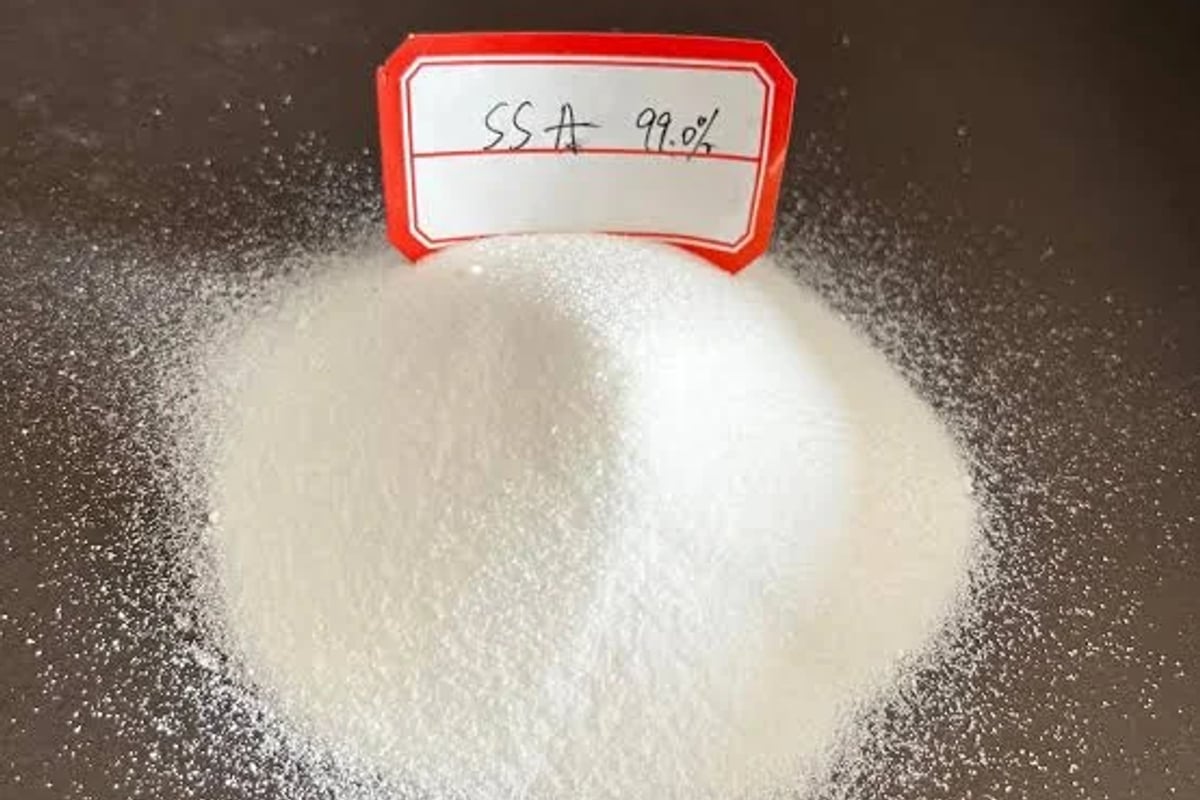
Volume requirements for detergent manufacturers typically necessitate bulk purchasing agreements. Soda ash dense, for example, serves as a critical alkaline builder in powder detergent formulations. Manufacturers often require consistent supply of Soda Ash Dense in bulk quantities ranging from truck loads to containerized shipments for export operations.
Effective bulk supply arrangements include:
- Volume commitments: Annual contracts with scheduled deliveries
- Flexible packaging: Bags, jumbo bags, or bulk tanker depending on handling infrastructure
- Quality guarantees: Specification agreements with testing protocols
- Pricing mechanisms: Fixed-price, indexed, or spot-market structures
- Logistics coordination: Delivery scheduling, storage requirements, inventory management
Quality Control and Product Development
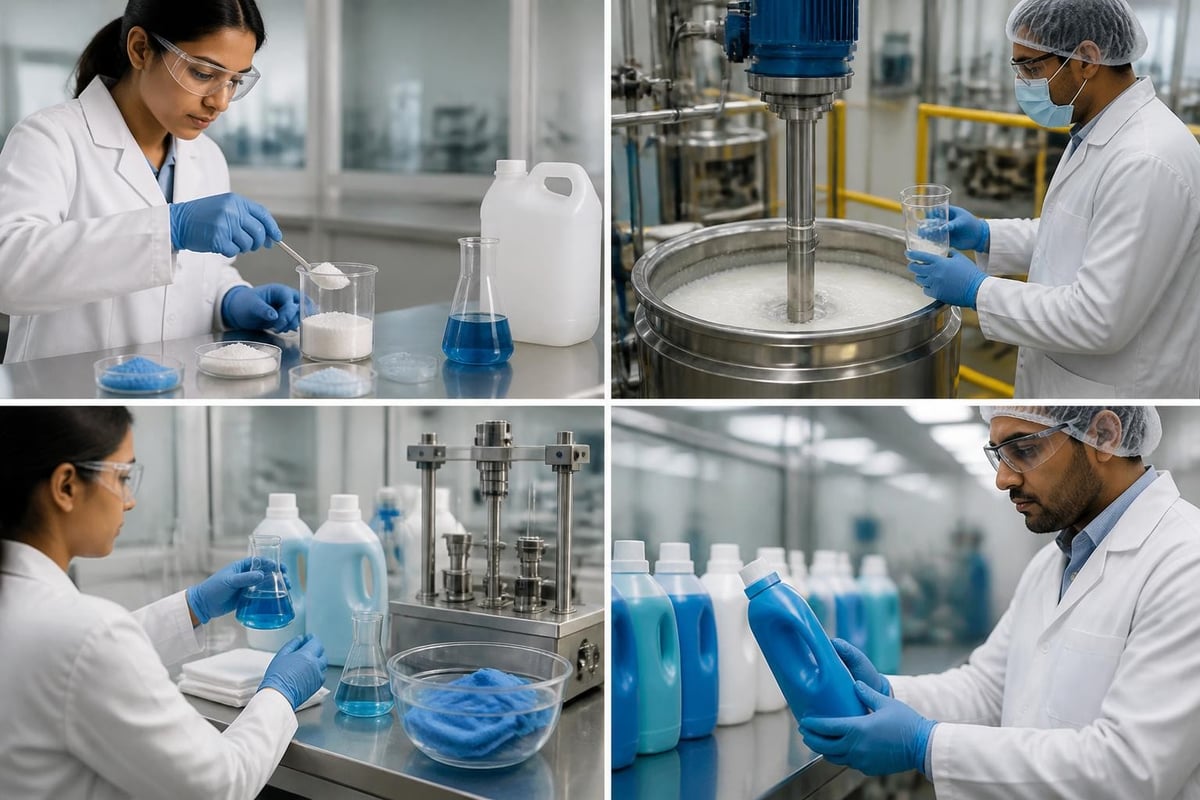
Detergent manufacturers implement rigorous quality control systems throughout the production process. From incoming raw material inspection to finished product testing, quality assurance ensures consistent performance and regulatory compliance.
Testing Protocols and Standards
Modern detergent manufacturing relies on standardized testing methods to verify product performance and safety. The ISO/TC 91 committee maintains international standards for surface active agents and detergents, providing recognized test methods for composition analysis, performance evaluation, and safety assessment.
Critical test parameters include:
- Surfactant content and active matter percentage
- pH value and alkalinity levels
- Enzyme activity (for enzyme-containing products)
- Washing performance (soil removal, whiteness retention)
- Stability testing (shelf life, temperature resistance)
- Safety parameters (skin irritation potential, biodegradability)
Formulation Innovation Trends
Research and development teams at leading detergent manufacturers continuously work to improve cleaning efficacy, reduce environmental impact, and meet evolving market demands. Innovation areas in 2026 include concentrated formulas, cold-water washing effectiveness, and sustainable ingredient alternatives.
A comprehensive review of sustainable surfactants published in 2024 highlights the growing focus on bio-based alternatives to petrochemical-derived ingredients, reflecting broader industry commitments to environmental sustainability.
Regulatory Compliance and Environmental Standards
Detergent manufacturers operate under increasingly stringent regulatory frameworks designed to protect human health and the environment. Compliance requirements vary by market but generally address ingredient safety, product labeling, packaging waste, and environmental discharge.
European Union Regulatory Framework
The EU maintains comprehensive regulations governing detergent products, including the Detergents Regulation (EC) No 648/2004 and related amendments. A 2024 European Parliament briefing on detergents and surfactants regulation outlines proposed updates including digital labeling requirements and enhanced environmental criteria.
Key EU compliance requirements:
- Surfactant biodegradability testing and documentation
- Ingredient disclosure (manufacturer and medical personnel access)
- Phosphate content restrictions
- Packaging and labeling standards
- Safety data sheet provision for professional products
Ecolabeling and Sustainability Certification
Environmental certification programs provide competitive advantages for detergent manufacturers committed to sustainability. The EU Ecolabel for detergents establishes technical criteria for ingredient selection, packaging materials, and product performance, helping manufacturers demonstrate environmental leadership.
Achieving ecolabel certification requires careful ingredient selection, with detailed assessment of each component's environmental profile, toxicity, and biodegradability characteristics.
Production Technologies and Equipment
Modern detergent manufacturing facilities employ diverse production technologies depending on product format, scale, and market requirements. Process design directly impacts product quality, production efficiency, and operational costs.
Powder Detergent Production
Spray drying remains the dominant technology for powder detergent manufacturing, creating free-flowing granules with good solubility characteristics. The process combines liquid slurry formulation with high-temperature drying to produce lightweight, porous particles.
Spray drying process steps:
- Slurry preparation (mixing surfactants, builders, water)
- Atomization in spray tower
- Hot air drying (counter-current or co-current flow)
- Particle cooling and screening
- Post-dosing of heat-sensitive ingredients
- Final blending and packaging
Alternative technologies such as agglomeration and dry mixing suit specific formulation requirements or smaller production scales, offering flexibility for specialized products or regional manufacturers.
Liquid Detergent Manufacturing
Liquid detergent production typically involves batch mixing in temperature-controlled vessels, combining surfactants, enzymes, fragrances, and other ingredients in precise sequences to ensure complete dissolution and homogeneity.
| Production Parameter | Typical Range | Critical Control Points |
|---|---|---|
| Mixing temperature | 20-60°C | Temperature control, viscosity monitoring |
| Batch size | 1,000-50,000 liters | Scale accuracy, mixing uniformity |
| pH adjustment | 7.0-10.5 | Inline pH measurement, automated dosing |
| Viscosity | 100-5,000 cP | Rheology testing, ingredient ratios |
Quality control during liquid production requires continuous monitoring of pH, viscosity, density, and visual appearance to maintain specification compliance across batches.
Supply Chain Management and Logistics
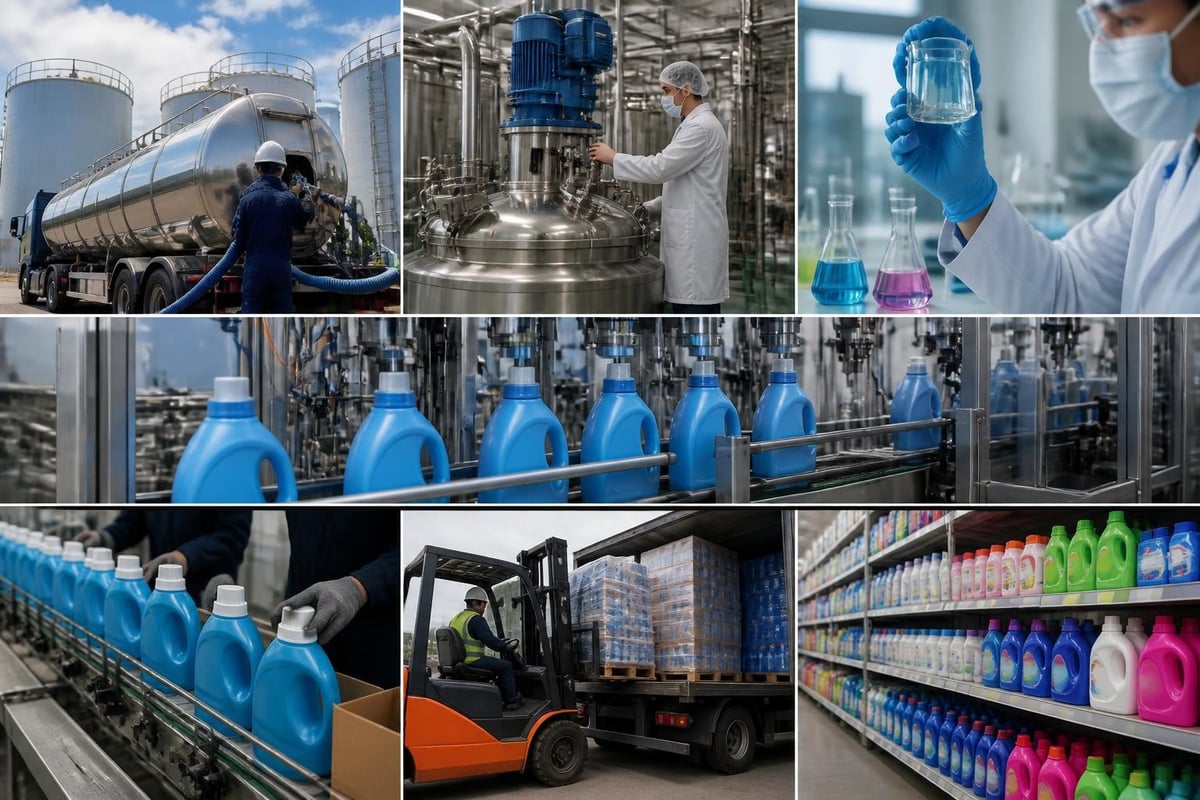
Effective supply chain management distinguishes successful detergent manufacturers from competitors. Raw material procurement, inventory optimization, production scheduling, and finished goods distribution require sophisticated coordination across multiple stakeholders.
Inventory Management Strategies
Detergent manufacturers balance the need for supply security against working capital costs and storage requirements. Different chemical ingredients require different inventory approaches based on supply risk, price volatility, and storage stability.
Common inventory strategies:
- Safety stock: Critical ingredients with long lead times or single-source risk
- Just-in-time: Stable commodities with multiple suppliers and short lead times
- Consignment: High-volume ingredients where suppliers maintain on-site inventory
- Strategic reserves: Materials subject to price volatility or supply disruptions
For manufacturers operating in South Africa or serving African markets, chemical sourcing capabilities that extend across borders provide important supply chain resilience, particularly for specialized ingredients not produced locally.
Packaging and Distribution Considerations
Finished product packaging represents a significant cost component and environmental consideration for detergent manufacturers. The industry continues to explore lightweight packaging, recycled content incorporation, and refillable systems to reduce environmental impact while maintaining product protection and consumer convenience.
Sustainability Initiatives and Industry Trends
Environmental sustainability has evolved from a niche consideration to a central strategic priority for detergent manufacturers worldwide. Industry leaders pursue multiple sustainability pathways simultaneously, addressing ingredient sourcing, manufacturing efficiency, packaging waste, and product-in-use impacts.
Sustainable Ingredient Development
Bio-based surfactants derived from renewable feedstocks offer reduced carbon footprints compared to petrochemical alternatives. Research continues into surfactants derived from agricultural waste streams, algae, and other sustainable sources that maintain cleaning performance while improving environmental profiles.
Emerging sustainable ingredients include:
- Plant-derived alcohol ethoxylates
- Biosurfactants from microbial fermentation
- Enzyme systems for enhanced cold-water performance
- Biodegradable chelating agents replacing phosphates
- Natural fragrance compounds
Manufacturing Process Efficiency
Energy consumption in detergent manufacturing, particularly in spray drying operations, represents both a cost and an environmental impact. Modern facilities incorporate heat recovery systems, optimized drying parameters, and renewable energy sources to reduce carbon emissions associated with production.
Water consumption management also receives increasing attention, with closed-loop systems recovering and recycling process water throughout manufacturing operations.
Circular Economy Approaches
Leading detergent manufacturers participate in circular economy initiatives that address packaging waste through recycling partnerships, take-back programs, and concentrated formulas that reduce packaging requirements per wash cycle.
Concentrated detergents offer multiple sustainability benefits: reduced packaging materials, lower transportation emissions per functional unit, and decreased shelf space requirements in retail environments.
Technical Support and Customer Service
Beyond supplying quality products, successful detergent manufacturers provide technical support that helps customers optimize formulations, troubleshoot production issues, and meet regulatory requirements in their target markets.
Formulation Assistance Programs
Technical service teams at detergent chemical suppliers offer formulation guidance that helps manufacturers develop products meeting specific performance targets, cost parameters, and regulatory requirements. This support proves particularly valuable when reformulating products to replace problematic ingredients or adapt to new market requirements.
For businesses seeking reliable industrial chemicals supply with technical support capabilities, partnerships with knowledgeable chemical distributors accelerate product development and ensure raw material compatibility.
Application Testing Support
Laboratory facilities at leading chemical suppliers conduct application testing that demonstrates ingredient performance in realistic detergent formulations. Testing services may include washing performance evaluation, compatibility studies, stability testing, and comparative analysis against competitive products.
Regional Manufacturing Considerations
Detergent manufacturing geography influences supply chain design, raw material sourcing, regulatory compliance, and market access strategies. Regional production offers advantages in freight costs, tariff optimization, and market responsiveness.
African Market Dynamics
Growing populations, increasing urbanization, and rising income levels drive detergent demand growth across African markets. Local manufacturing serves these markets more efficiently than imports, supporting regional economic development while reducing product costs through localized supply chains.
Chemical suppliers serving African detergent manufacturers must navigate diverse regulatory environments, varying infrastructure capabilities, and different market preferences across countries. Suppliers with operations in multiple countries, such as chemical suppliers in Zambia or the Democratic Republic of Congo, provide valuable market access and logistical advantages.
Infrastructure and Utilities Requirements
Successful detergent manufacturing requires reliable access to electricity, process water, compressed air, and steam. Infrastructure limitations in some markets may constrain production technology choices or necessitate investment in backup power generation and water treatment capabilities.
Future Outlook for Detergent Manufacturers
The detergent manufacturing industry faces both challenges and opportunities as it navigates sustainability imperatives, raw material price volatility, changing consumer preferences, and technological innovation. Manufacturers that successfully balance performance, cost, and environmental responsibility will capture market share in an increasingly competitive landscape.
Key industry drivers for 2026 and beyond:
- Continued regulatory tightening around ingredient safety and environmental impact
- Consumer demand for sustainable products with transparent ingredient disclosure
- Raw material innovations offering improved performance and environmental profiles
- Digital technologies enabling supply chain optimization and quality traceability
- Consolidation pressures favoring scale efficiencies and global sourcing capabilities
The most successful detergent manufacturers maintain flexibility to adapt formulations as regulations evolve, consumer preferences shift, and new technologies emerge. Strong relationships with reliable chemical suppliers provide the supply chain resilience necessary to navigate market uncertainties while maintaining production continuity.
Detergent manufacturers succeed through careful attention to raw material quality, production efficiency, regulatory compliance, and sustainable innovation. Whether you're formulating new products, optimizing existing formulas, or securing reliable chemical supply, partnering with experienced suppliers makes the difference. Nwans Chemicals provides bulk chemical supply solutions for detergent manufacturers across South Africa and African markets, delivering industrial chemicals, specialty ingredients, competitive pricing, and reliable logistics support that keeps production running smoothly.
Leave A Comment