How to Use Caustic Soda for Water Treatment & pH Correction
Acidic water causes corrosion, damages infrastructure, and disrupts biological treatment processes — which is why pH correction is one of the most critical steps in any water or wastewater treatment operation. Caustic soda (sodium hydroxide) is one of the most widely used chemicals for this job. This guide explains how caustic soda works for pH correction, which form to use, dosing basics, and what to check before you order from a caustic soda supplier South Africa facilities can depend on.
Why pH Correction Matters in Water Treatment
Water and wastewater need to sit within a specific pH range to be safely treated, discharged, or reused. When water is too acidic, it corrodes pipes, tanks, and treatment equipment, disrupts the biological processes used in wastewater treatment, and can violate discharge or drinking water regulations. Most treatment facilities aim to bring water into a neutral-to-slightly-alkaline range, generally around pH 6.5 to 8.5, to protect infrastructure and support effective downstream treatment.
How Caustic Soda Corrects pH
Caustic soda is a strong alkali. When dissolved in water, it releases hydroxide ions that react with and neutralize excess hydrogen ions in acidic water, raising the pH toward neutral. This reaction happens quickly, which is one of the reasons caustic soda is favored over slower-acting alternatives like lime in many treatment setups. Beyond pH correction, caustic soda is also used to precipitate dissolved heavy metals out of wastewater as insoluble hydroxides, which are then removed through settling or filtration — an important step in industrial wastewater compliance. According to the Water Chemicals Codex published by the National Academies Press, sodium hydroxide is a recognized water treatment chemical specifically used for pH adjustment, supplied commercially as concentrated solutions for this purpose.
Which Form of Caustic Soda Is Best for Water Treatment?
The right form depends on your facility’s scale, dosing setup, and infrastructure.
Caustic Soda Pearls
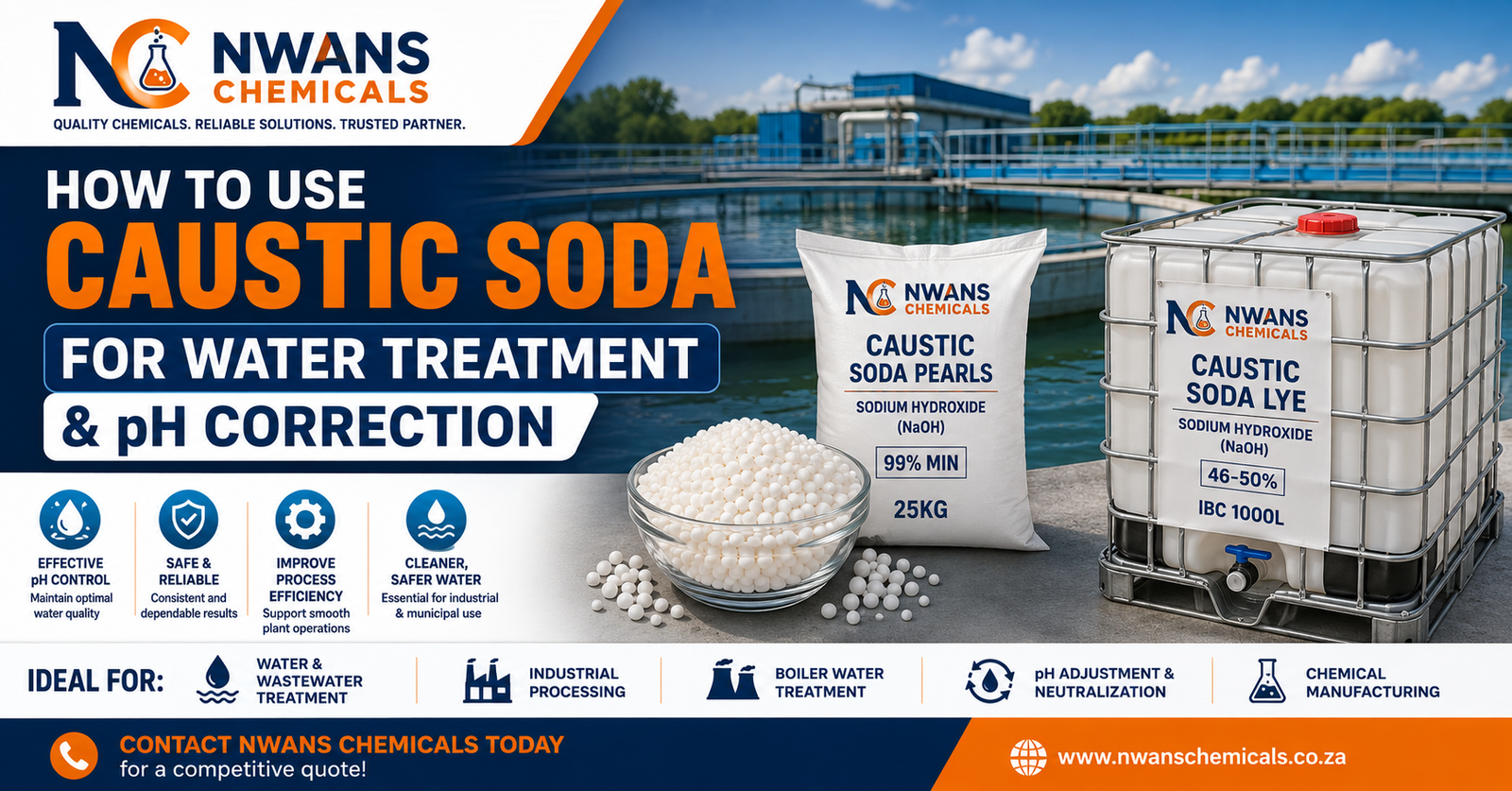
Pearls are well suited to facilities using automated solid dosing systems. Their uniform shape flows consistently through hoppers and feeders, making them a reliable choice for larger treatment plants that need predictable, low-dust dosing.
Caustic Soda Lye
Liquid lye, typically supplied at 32% or 50% concentration, is the preferred option for continuous, high-volume treatment processes. Because it’s already dissolved, it can be metered directly into water streams via chemical feed pumps, without the dissolution step required for solid forms — making it a strong fit for municipal-scale and industrial wastewater operations with existing tank and pump infrastructure.
Caustic Soda Flakes
Flakes can be used for smaller-scale or batch water treatment applications where manual dosing is practical, though they’re less common in continuous large-scale systems compared to pearls or lye.
| Form | Best Fit For Water Treatment | Dosing Method |
|---|---|---|
| Pearls | Mid-to-large plants with solid feed systems | Automated solid dosing |
| Lye (liquid) | Continuous, high-volume municipal/industrial treatment | Metered liquid injection |
| Flakes | Small-scale or batch treatment | Manual dosing |
Dosing Basics: Getting the Amount Right
Caustic soda dosing depends on the initial pH of the water, its buffering capacity, and the target pH range — there’s no universal dosage that fits every site. In practice, treatment plants typically determine dosage through jar testing (a controlled lab-scale trial) before committing to full-scale dosing rates, and then fine-tune using inline pH monitoring and automated dosing controls to maintain the target range as water quality naturally fluctuates. Because the neutralization reaction isn’t linear near the target pH, small over-dosing can push water from too acidic to too alkaline quickly, so gradual dosing with continuous pH monitoring is standard practice.
Note: Always work with your process engineer or water treatment specialist to determine dosing rates specific to your water chemistry and equipment — this guide is not a substitute for site-specific technical guidance.
Safety Considerations When Dosing Caustic Soda
Caustic soda is corrosive and generates heat when dissolved in water, so safe handling is essential at every stage of dosing:
- Always add caustic soda to water, never water to caustic soda, to avoid dangerous splattering from the exothermic reaction
- Use corrosion-resistant feed pumps and storage tanks, particularly for concentrated lye solutions
- Ensure operators wear appropriate PPE — gloves, eye protection, and in some cases respiratory protection
- Maintain good ventilation around dosing and mixing areas
- Store solid forms away from moisture, and keep liquid lye storage tanks properly bunded
For general drinking water treatment guidance on pH adjustment using sodium hydroxide, see this overview from Drinking Water and Human Health, a US university extension resource.
What to Check Before Ordering Caustic Soda for Water Treatment
Before placing an order with a caustic soda supplier South Africa treatment plants should verify:
- Purity/assay percentage, particularly important where trace impurities could affect treated water quality
- Certificate of Analysis (COA) for each batch, especially for potable water applications
- Form and concentration — pearls, flakes, or lye at 32% or 50%
- Safety Data Sheet (SDS) for handling, storage, and emergency response guidance
- Reliable, consistent supply — treatment processes depend on uninterrupted dosing, so delivery reliability matters as much as price
Frequently Asked Questions
1. How does caustic soda correct pH in water treatment? Caustic soda dissolves in water and releases hydroxide ions, which neutralize excess hydrogen ions in acidic water, raising the pH toward a neutral or slightly alkaline range.
2. What form of caustic soda is best for water treatment plants? Liquid lye is generally preferred for continuous, high-volume treatment processes using metered dosing pumps, while pearls suit facilities using automated solid dosing systems. Flakes are more common in smaller, manual-dosing setups.
3. What pH range do water treatment plants typically target? Most treatment facilities aim to keep water within a pH range of roughly 6.5 to 8.5 to protect infrastructure, support treatment processes, and meet regulatory requirements — though exact targets vary by application and local regulation.
4. Is caustic soda safe to use in drinking water treatment? Caustic soda is used in drinking water treatment for pH adjustment, but it must be food-grade certified and dosed according to strict guidelines. Always confirm food-grade certification with your supplier for potable water applications.
5. How do treatment plants determine the correct caustic soda dosage? Dosage is typically determined through jar testing at lab scale, then fine-tuned using inline pH monitoring and automated dosing controls once implemented at full scale.
6. Can caustic soda be used for both water and wastewater treatment? Yes. It’s used for pH correction in both drinking water treatment and industrial or municipal wastewater treatment, as well as for precipitating heavy metals out of wastewater streams.
Get Reliable Caustic Soda for Your Treatment Plant
Consistent pH correction depends on consistent chemical supply. Whether your facility needs caustic soda pearls, liquid lye, or flakes, Nwans Chemicals supplies verified-purity caustic soda with full documentation for water treatment applications across South Africa. Contact us for a tailored quote today.
Leave A Comment