
Navigating chemical sourcing South Africa requires strategic planning, regulatory knowledge, and trusted supplier relationships. Whether your business operates in mining, manufacturing, water treatment, agriculture, or specialty processing, securing reliable chemical supply with consistent quality, competitive pricing, and compliant logistics forms the foundation of operational success. South African companies face unique challenges including import regulations, dangerous goods transport requirements, supplier verification, and balancing local versus international procurement. This comprehensive guide examines the complete chemical sourcing process, from initial supplier evaluation through delivery, helping businesses optimize their procurement strategies while maintaining compliance and cost efficiency.
Understanding Chemical Sourcing South Africa Market Dynamics
The South African chemical market represents a sophisticated blend of local manufacturing capacity, strategic imports, and regional distribution networks. Businesses sourcing chemicals in South Africa navigate a landscape shaped by domestic production strengths, import dependencies, and evolving regulatory frameworks.
Local Manufacturing Versus Import Channels
South Africa maintains substantial domestic chemical manufacturing for several product categories, particularly commodity chemicals, mining reagents, and water treatment products. Companies can often source caustic soda, sulphuric acid, and certain industrial chemicals from local producers, reducing lead times and simplifying logistics.
Key advantages of local chemical sourcing include:
Shorter delivery timeframes (typically 7-14 days)
Reduced freight costs and customs complexity
Easier quality audits and supplier visits
Denominated pricing in local currency
Simplified regulatory compliance for domestic products
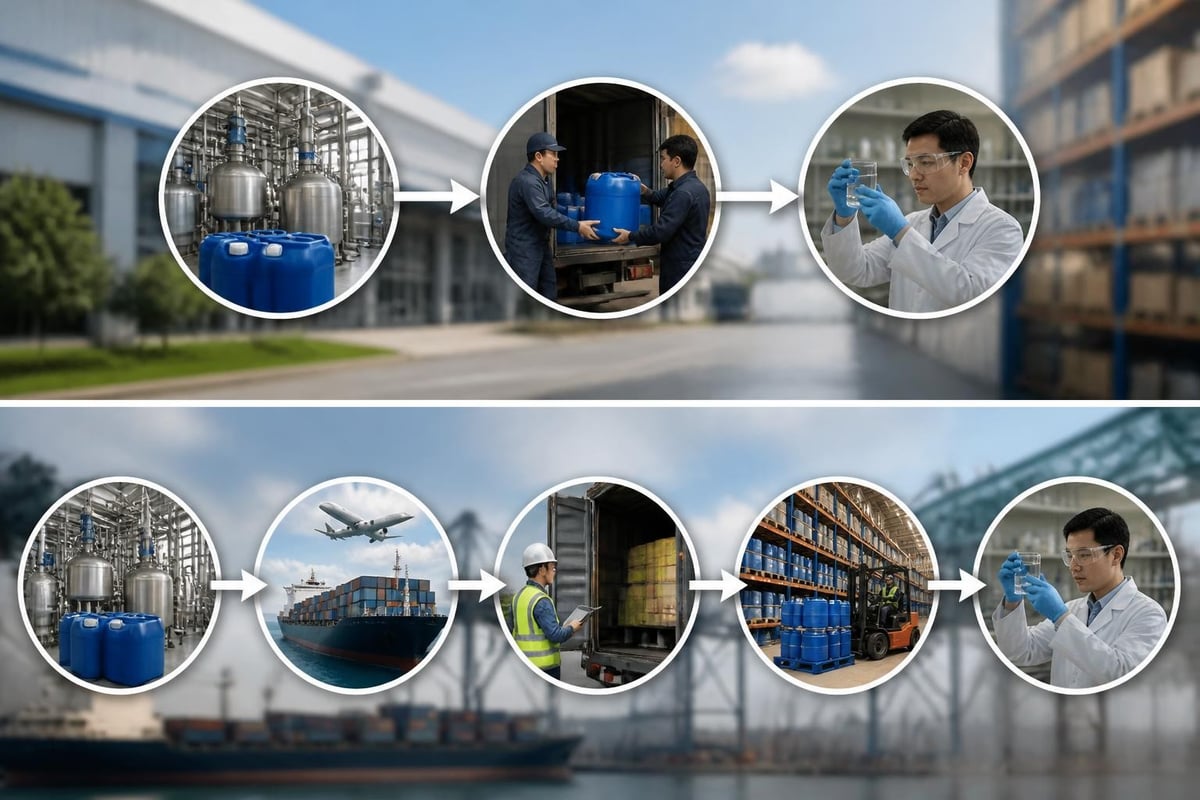
However, specialty chemicals, advanced reagents, and certain pharmaceutical-grade products frequently require international sourcing. Import channels connect South African buyers with manufacturers in China, Europe, India, and the United States, expanding product availability but adding complexity.
Market Size and Trade Patterns
According to Statistics South Africa chemical sector trade data, the country imports significant volumes of industrial chemicals while maintaining export strength in mining chemicals and processed products. Understanding these trade patterns helps businesses identify reliable sourcing channels and anticipate market availability.
The chemical sourcing South Africa market continues evolving with infrastructure developments, regulatory updates, and shifting manufacturing footprints. Businesses must monitor these dynamics to optimize procurement strategies.
Critical Steps in the Chemical Sourcing Process
Effective chemical procurement follows a systematic approach that balances quality requirements, cost considerations, regulatory compliance, and supply reliability. The sourcing process typically spans multiple phases, each requiring specific documentation and verification.
Initial Needs Assessment and Specification Development
Before engaging suppliers, businesses must clearly define their chemical requirements. This foundation prevents costly misunderstandings and ensures suppliers can accurately respond to inquiries.
Essential specification elements include:
Chemical identity (CAS number, chemical name, synonyms)
Purity requirements and grade (technical, industrial, pharmaceutical, food-grade)
Physical form (liquid, powder, flakes, granules)
Packaging preferences (drums, IBCs, bulk tankers, bags)
Volume requirements (initial order and ongoing monthly/annual needs)
Quality documentation needs (COA, SDS, compliance certificates)
Delivery location and timeline expectations
Precision in specifications streamlines supplier quotations and reduces back-and-forth clarifications. For regulated applications such as water treatment, food processing, or pharmaceutical manufacturing, grade specifications become particularly critical.
Supplier Identification and Qualification
Chemical sourcing South Africa involves identifying potential suppliers through industry directories, trade associations, online platforms, and professional networks. The Chemical and Allied Industries’ Association provides industry resources and member directories that support supplier discovery.
Supplier Evaluation Criteria | Why It Matters | Verification Methods |
|---|---|---|
Product availability | Confirms in-stock status and lead times | Request stock confirmation, visit facilities |
Quality systems | Ensures consistent product specifications | Review ISO certifications, audit reports |
Regulatory compliance | Validates legal requirements | Check NRCS registration, waste licenses |
Financial stability | Reduces supply disruption risk | Request financial references, check business history |
Technical support | Provides application assistance | Assess technical team credentials |
Logistics capabilities | Confirms delivery to your location | Review transport fleet, dangerous goods licenses |
Reputable suppliers maintain proper registration with the National Regulator for Compulsory Specifications where applicable and demonstrate compliance with relevant industry standards. When evaluating suppliers, businesses should verify these credentials before committing to significant orders.
Documentation Review and Quality Verification
Every chemical shipment should arrive with comprehensive documentation that verifies product identity, quality, and safety information. This documentation forms the foundation of quality assurance and regulatory compliance.
Critical documents for chemical sourcing include:
Certificate of Analysis (COA): Batch-specific test results confirming product meets specifications
Safety Data Sheet (SDS): Hazard information, handling procedures, emergency response guidance (required under Occupational Health and Safety Act regulations)
Compliance certificates: Industry-specific certifications (food-grade, pharmaceutical, NSF, halal, kosher)
Transport documentation: Dangerous goods declarations, shipping manifests, customs paperwork
Product specifications: Manufacturer’s guaranteed specifications and properties
Businesses should establish clear documentation requirements with suppliers before placing orders. For ongoing supply relationships, request access to batch COAs and maintain organized records for traceability and compliance audits.
Navigating Regulatory Compliance and Safety Requirements
Chemical sourcing in South Africa operates within a comprehensive regulatory framework designed to protect worker safety, environmental quality, and public health. Businesses must navigate these requirements throughout the procurement and handling process.
Workplace Safety and Hazardous Chemical Regulations
The Occupational Health and Safety Act Hazardous Chemical Agents Regulations establish employer obligations for chemical safety, including exposure monitoring, risk assessments, and worker training. When sourcing chemicals, businesses must ensure suppliers provide compliant SDS documentation using the Globally Harmonized System (GHS) format.
Employers must maintain chemical inventories, conduct risk assessments for each hazardous substance, and implement appropriate control measures. These requirements influence sourcing decisions, as suppliers providing comprehensive safety documentation and technical support simplify compliance obligations.
Transport and Logistics Compliance
Moving chemicals from supplier to end-user requires compliance with dangerous goods transport regulations. The Department of Transport dangerous goods regulations govern road, rail, and sea transport of hazardous materials, establishing packaging, labeling, documentation, and vehicle requirements.
Professional chemical suppliers maintain dangerous goods transport licenses and employ trained drivers, ensuring compliant delivery. When evaluating chemical sourcing options in South Africa, verify that suppliers possess appropriate transport authorizations and follow proper handling protocols.
Environmental and Waste Management Obligations
The National Environmental Management: Waste Act establishes requirements for chemical waste management, including storage, treatment, and disposal. Businesses must consider end-of-life handling when sourcing chemicals, particularly for hazardous substances requiring specialized disposal.
Choosing suppliers who provide technical guidance on waste minimization, container return programs, and disposal options supports environmental compliance and cost management. These considerations extend beyond initial procurement to total lifecycle management.

Pricing Considerations and Cost Optimization Strategies
Chemical pricing in South Africa reflects multiple variables including raw material costs, manufacturing location, packaging formats, order quantities, logistics distances, and market competition. Understanding these factors enables more strategic procurement decisions.
Volume-Based Pricing Structures
Chemical suppliers typically offer tiered pricing based on order quantities. Bulk purchases deliver significant per-unit cost reductions but require adequate storage capacity and inventory management.
Common chemical packaging and pricing tiers:
Sample quantities (1-25 kg): Highest per-unit cost, useful for testing
Small orders (25-500 kg): Moderate pricing, suitable for low-volume needs
Pallet quantities (500-1,000 kg): Improved pricing, standard for regular users
Bulk bags/IBCs (1,000-20,000 kg): Strong pricing, requires handling equipment
Tanker loads (20,000+ kg): Best pricing, requires storage infrastructure
Businesses should calculate total cost of ownership including storage costs, inventory carrying costs, and potential waste from expired material when evaluating volume discounts. For many operations, establishing regular monthly deliveries in optimal quantities balances cost efficiency with operational flexibility.
Local Versus Import Cost Analysis
When chemical sourcing South Africa offers both local and international options, comprehensive cost comparison reveals the true economic choice. Import pricing includes not only product cost but freight, insurance, customs duties, clearing fees, and extended working capital requirements.
Cost Factor | Local Sourcing | International Sourcing |
|---|---|---|
Product unit price | Moderate to high | Often lower base price |
Freight costs | Local transport only | International freight + local delivery |
Customs and duties | None | 5-20% depending on HS code |
Lead time | 1-2 weeks | 6-12 weeks |
Minimum order | Flexible | Often full container (20-25 MT) |
Currency risk | None | Exchange rate volatility |
Working capital | Lower inventory requirements | Higher inventory to cover long lead times |
For chemicals available from reliable local sources, total landed costs often favor domestic procurement despite potentially higher base prices. However, specialty chemicals unavailable locally or those with substantial international price advantages justify import sourcing despite added complexity.
Long-Term Supply Agreements and Strategic Partnerships
Businesses with consistent chemical requirements benefit from structured supply agreements that lock in pricing, guarantee availability, and streamline procurement administration. Annual contracts with volume commitments typically secure preferential pricing and priority allocation during supply constraints.
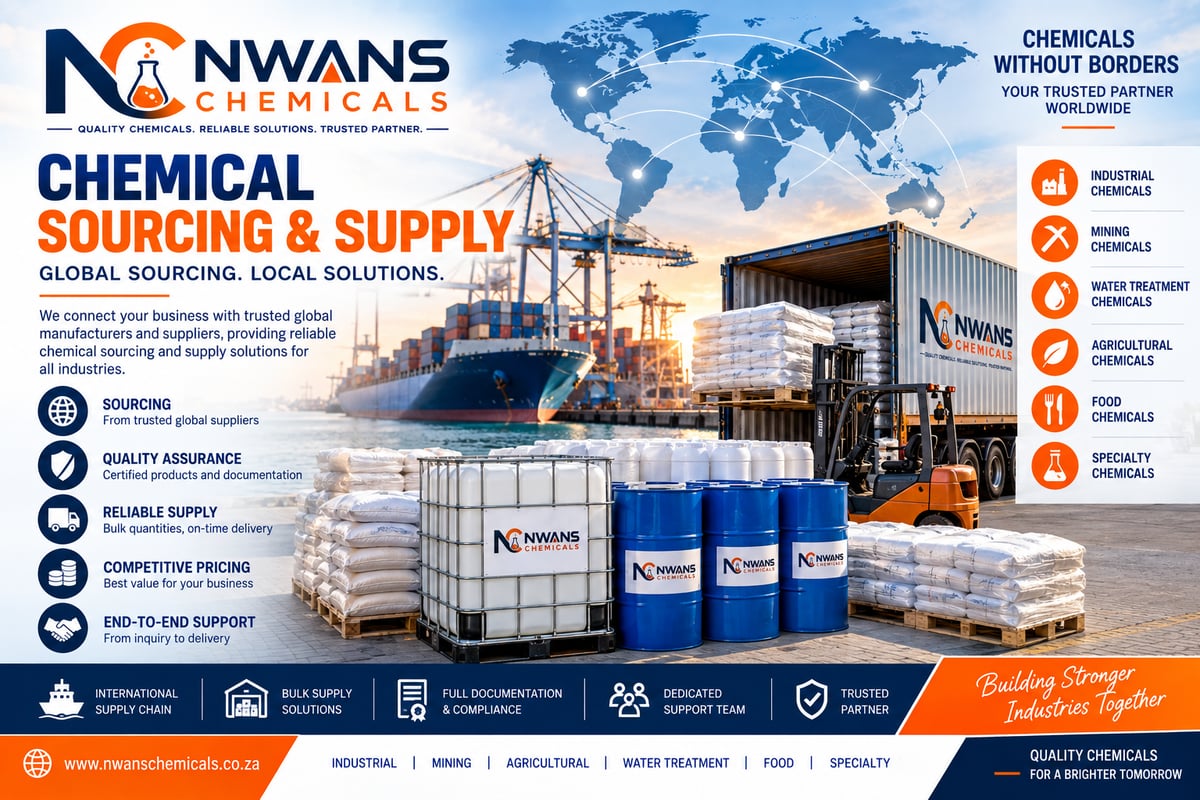
For critical chemicals supporting production operations, developing strategic supplier partnerships provides additional value beyond transactional cost savings. Partners offering technical support, inventory management programs, and collaborative forecasting help optimize total supply chain performance. Nwans Chemicals provides chemical sourcing and procurement solutions designed to simplify industrial chemical supply with competitive pricing, bulk quantities, and reliable delivery infrastructure.
Logistics and Delivery Infrastructure Considerations
Efficient chemical distribution requires sophisticated logistics capabilities that address product handling requirements, geographic coverage, and delivery timing. When evaluating chemical sourcing options in South Africa, logistics infrastructure significantly impacts operational reliability.
Geographic Coverage and Delivery Networks
South Africa’s chemical distribution network centers around major industrial hubs including Gauteng, KwaZulu-Natal, Western Cape, and mining regions. Suppliers with nationwide distribution capabilities serve diverse customer locations, while regional specialists may offer advantages for concentrated operations.
Key logistics considerations include:
Warehouse locations and stock holding points
Delivery vehicle fleet and dangerous goods compliance
Coverage to remote mining and agricultural areas
Cross-border delivery for SADC region operations
Emergency delivery and rapid response capabilities
Businesses operating across multiple sites should verify suppliers can efficiently serve all locations. Consolidated delivery programs that coordinate shipments to multiple sites reduce freight costs and administrative complexity.
Packaging Formats and Handling Equipment
Chemical packaging directly impacts handling efficiency, storage density, and total cost. Suppliers offering multiple packaging options enable customers to optimize for their specific infrastructure and usage patterns.
Standard industrial chemical packaging includes 25 kg bags, 200-liter drums, 1,000-liter IBCs (intermediate bulk containers), and bulk tanker deliveries. Operations with appropriate handling equipment (forklifts, IBC pumps, bulk storage tanks) achieve cost savings through larger formats, while facilities with limited infrastructure may require smaller packaging despite higher per-unit costs.
Inventory Management and Just-in-Time Delivery
Balancing inventory costs against supply security challenges procurement teams across industries. Chemical sourcing strategies must align with broader inventory management philosophies and operational requirements.
Inventory approach options:
Large safety stocks: Highest carrying costs, maximum supply security
Moderate inventory with scheduled deliveries: Balanced approach, most common
Just-in-time delivery: Minimal inventory, requires highly reliable suppliers
Consignment inventory: Supplier-owned stock on-site, pay on consumption
The optimal approach depends on chemical criticality, supplier reliability, storage capacity, and cost of production disruption. Many businesses employ tiered strategies, maintaining larger inventories for critical chemicals while using JIT delivery for commodity products with multiple supply sources.

Quality Assurance and Supplier Performance Management
Consistent chemical quality directly impacts production efficiency, product quality, and regulatory compliance. Establishing robust quality assurance processes and monitoring supplier performance protects business operations from costly disruptions.
Incoming Quality Control Procedures
Professional operations implement systematic incoming inspection procedures that verify chemical shipments meet specifications before introducing material into production processes. These procedures range from simple visual inspection and documentation review to comprehensive laboratory testing.
Recommended incoming quality checks:
Visual inspection of packaging integrity and labeling accuracy
Verification of COA against purchase order specifications
Confirmation of batch numbers and manufacturing dates
Physical property testing (pH, specific gravity, appearance)
Periodic third-party laboratory analysis for critical chemicals
Documentation archival for traceability and compliance
The rigor of quality control should align with chemical criticality and application sensitivity. Water treatment chemicals, food-grade materials, and pharmaceutical ingredients warrant more extensive testing than commodity industrial chemicals for non-critical applications.
Supplier Scorecarding and Performance Metrics
Systematic supplier performance monitoring identifies excellence, highlights improvement opportunities, and informs future sourcing decisions. Effective scorecards balance multiple performance dimensions rather than focusing solely on price.
Performance Dimension | Measurement Approach | Target Performance |
|---|---|---|
Quality conformance | Percentage of shipments meeting specifications | >98% conformance |
Delivery reliability | On-time delivery rate | >95% on-time |
Documentation accuracy | Complete and correct paperwork | 100% compliant |
Technical responsiveness | Response time to technical inquiries | <24 hours |
Problem resolution | Time to resolve issues | <48 hours |
Pricing competitiveness | Market benchmark comparison | Within 5% of market |
Quarterly supplier reviews using scorecard data facilitate constructive performance discussions and collaborative improvement initiatives. High-performing suppliers earn increased business, while consistent underperformance triggers corrective action or supplier replacement.
Handling Quality Issues and Non-Conformances
Despite robust supplier qualification, occasional quality issues occur. Professional chemical suppliers maintain clear procedures for handling complaints, investigating root causes, and implementing corrective actions.
When quality problems arise, document the issue with photographs, test data, and specific details. Contact suppliers promptly with evidence and request investigation. Reputable suppliers respond quickly, arrange product testing, and provide resolution through replacement, credit, or technical support.
Persistent quality problems signal deeper supplier capability issues requiring formal corrective action requests or alternative supplier development. Your business deserves reliable chemical sourcing South Africa partners who consistently deliver specifications and stand behind their products.
Building Strategic Supplier Relationships
Transactional chemical purchasing focuses primarily on price and availability, while strategic supplier relationships deliver broader value through collaboration, innovation, and mutual commitment. For businesses with significant chemical requirements, investing in supplier partnerships generates competitive advantages.
Collaborative Forecasting and Planning
Sharing forward-looking demand information enables suppliers to optimize inventory, secure raw materials, and allocate production capacity. This collaboration particularly benefits businesses with variable demand patterns or seasonal fluctuations.
Regular planning discussions covering upcoming projects, production schedule changes, and anticipated volume shifts help suppliers proactively manage supply. In return, businesses gain improved product availability, reduced lead times, and sometimes preferential allocation during industry-wide shortages.
Technical Support and Application Development
Leading chemical suppliers employ technical specialists who assist customers with product selection, application optimization, dosage calculations, and troubleshooting. This expertise proves particularly valuable when implementing new processes, optimizing existing operations, or addressing performance challenges.
When evaluating chemical sourcing partners, assess technical support capabilities including laboratory facilities, application engineers, and industry-specific expertise. Suppliers who invest in technical teams demonstrate commitment to customer success beyond mere product transactions.
Value-Added Services and Innovation
Progressive supplier relationships extend beyond product supply to encompass value-added services that simplify operations and reduce total costs. These services might include inventory management programs, automated reordering systems, equipment provision, training programs, and sustainability initiatives.
Suppliers familiar with your operations can propose innovations including alternative chemicals, process improvements, waste reduction opportunities, and cost optimization strategies. These collaborative initiatives deliver value impossible through arm’s-length transactional relationships.
Emerging Trends in Chemical Sourcing South Africa
The chemical sourcing landscape continues evolving driven by sustainability imperatives, digital transformation, regulatory developments, and shifting global supply chains. Forward-thinking businesses monitor these trends and adapt procurement strategies accordingly.
Sustainability and Responsible Sourcing
Environmental, social, and governance (ESG) considerations increasingly influence chemical procurement decisions. Businesses face stakeholder pressure to source chemicals from manufacturers demonstrating environmental stewardship, worker safety, and community responsibility.
Sustainability factors in chemical sourcing:
Supplier environmental certifications and carbon footprint
Product lifecycle impacts and biodegradability
Packaging sustainability and circular economy initiatives
Labor practices and safety performance
Waste reduction and recycling programs
Industry initiatives like Responsible Care® promote continuous improvement in chemical manufacturing, handling, and distribution. The Chemical and Allied Industries’ Association tracks Responsible Care performance across South African chemical companies, providing transparency on industry progress.
Digital Procurement Platforms
Technology platforms are transforming chemical sourcing by improving price transparency, streamlining transaction processes, and expanding supplier access. Digital marketplaces, e-procurement systems, and supplier portals reduce administrative burden while enhancing sourcing efficiency.
These tools enable rapid quote comparison, automated purchase order generation, shipment tracking, and electronic documentation management. While chemical procurement maintains relationship-intensive elements, digital tools handle routine transactions more efficiently, freeing procurement professionals for strategic activities.
Supply Chain Resilience and Dual Sourcing
Recent global disruptions highlighted supply chain vulnerabilities, prompting businesses to reassess single-source dependencies. Chemical sourcing strategies increasingly emphasize resilience through diversified supplier bases, strategic inventory buffers, and local supply development.
Dual sourcing strategies that maintain relationships with both primary and backup suppliers provide flexibility during disruptions. While potentially increasing procurement complexity, this approach reduces business continuity risks associated with supplier failures, production interruptions, or logistics disruptions.
Strategic chemical sourcing South Africa requires balancing quality, compliance, cost, and reliability while building supplier relationships that support long-term business success. By implementing systematic supplier evaluation, maintaining rigorous quality standards, and leveraging professional distribution partnerships, businesses secure the chemical supplies essential to their operations. Nwans Chemicals serves as a trusted partner for South African businesses requiring industrial chemicals, mining chemicals, water treatment chemicals, and specialty products, delivering reliable supply, competitive pricing, and comprehensive technical support across diverse industries.
Leave A Comment