
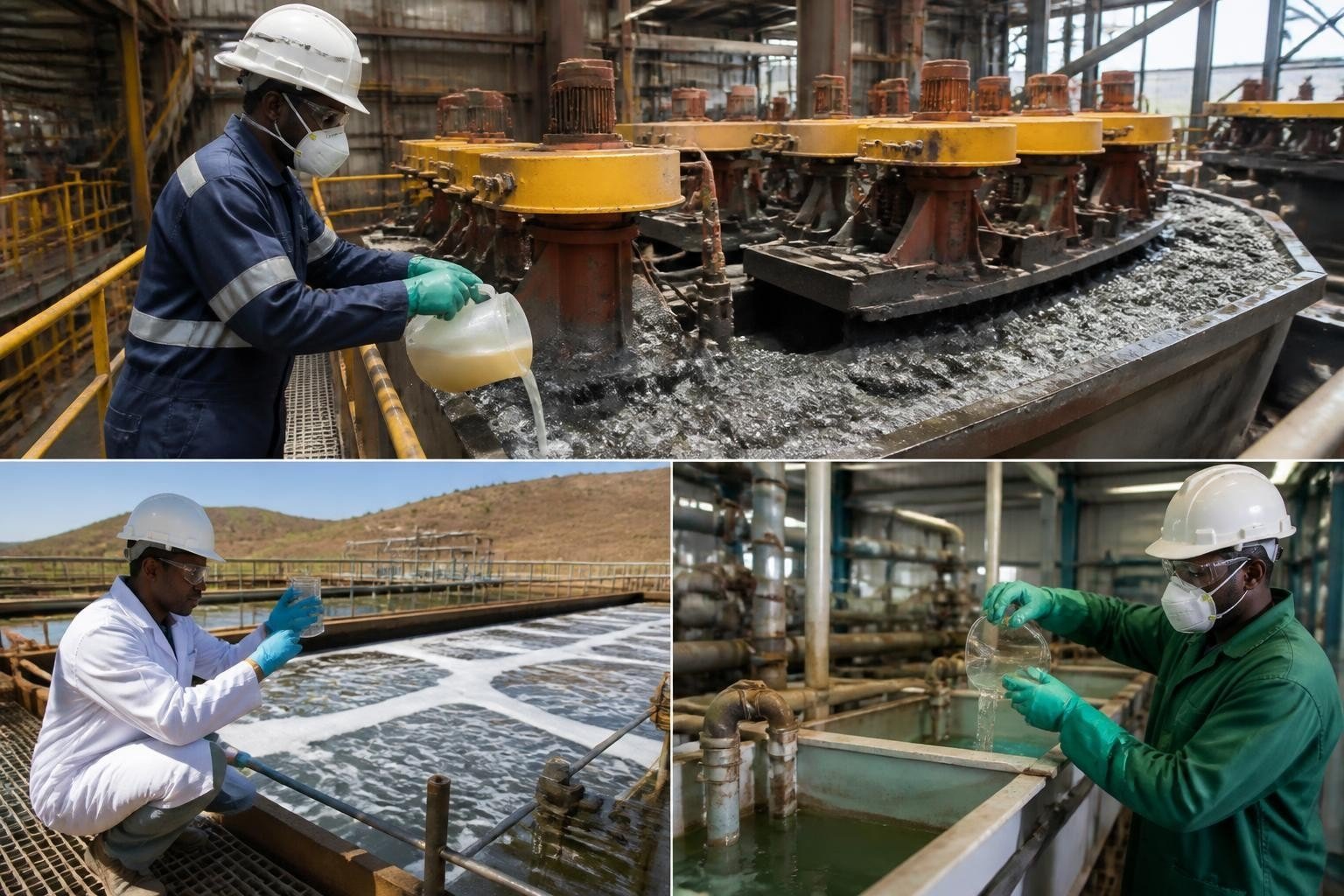
The mining sector relies on a sophisticated array of chemicals to extract, process, and refine valuable minerals from ore bodies. From flotation reagents that separate target minerals to leaching agents that extract precious metals, chemicals in mining are fundamental to operational efficiency and economic viability. In South Africa and across the African continent, where mining remains a cornerstone industry producing gold, platinum, copper, chrome, and other minerals, understanding the chemical requirements of mineral processing is essential for procurement managers, metallurgists, and operations directors.
Understanding the Role of Chemicals in Mining Operations
Chemicals in mining serve multiple critical functions throughout the mineral processing value chain. They enable the separation of valuable minerals from waste rock, facilitate metal extraction from ores, control process conditions, and treat mine water to meet environmental standards.
The chemical requirements vary significantly depending on the ore type, target mineral, processing method, and metallurgical characteristics. Gold operations typically require cyanide-based leaching circuits, while base metal operations rely heavily on flotation chemistry. Platinum group metal (PGM) mines use sophisticated flotation reagent suites, and chrome operations employ both flotation and gravity concentration with supporting chemical programs.
Economic and Operational Impact
The selection and management of chemicals in mining directly impacts recovery rates, concentrate grades, operating costs, and environmental compliance. A well-optimized chemical program can increase metal recovery by several percentage points, translating to millions in additional revenue for large-scale operations.
Process efficiency depends on consistent chemical quality, accurate dosing, and proper reagent selection for specific ore characteristics. Suppliers who understand these requirements and provide reliable technical support add measurable value beyond simply delivering product.
Flotation Reagents: The Foundation of Mineral Separation
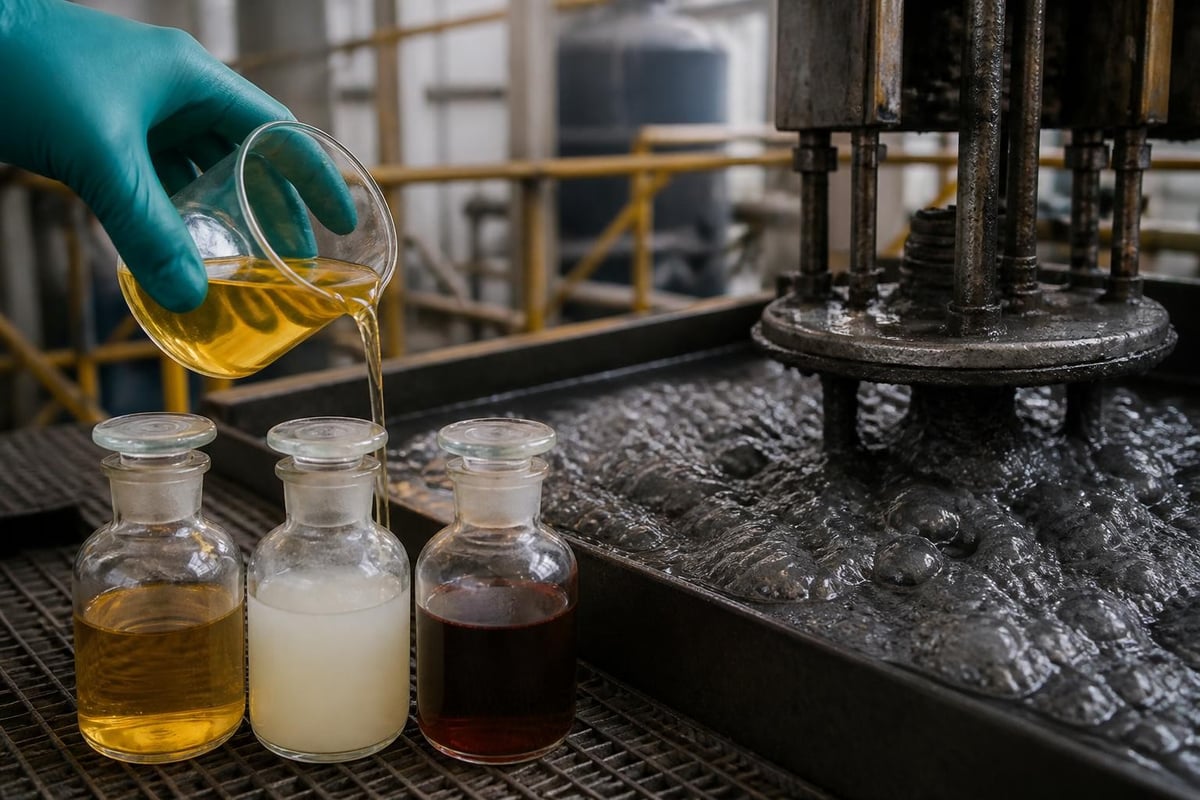
Flotation chemistry represents the largest chemical consumption category for many mining operations. This process uses collectors, frothers, and modifying agents to create hydrophobic conditions on target mineral surfaces, allowing them to attach to air bubbles and float to the surface for recovery.
Collectors: Xanthates and Specialty Reagents
Collectors are surface-active chemicals that selectively adsorb onto target mineral surfaces, making them hydrophobic. The xanthate family dominates sulfide mineral flotation across global mining operations.
Sodium Isobutyl Xanthate (SIBX) is the most widely used collector for copper, lead, zinc, and precious metal sulfides. SIBX offers moderate selectivity and excellent collecting power across a range of sulfide minerals, making it the standard choice for many base metal operations in Africa.
Sodium Isopropyl Xanthate (SIPX) provides faster flotation kinetics and is particularly effective for fine-grained sulfides. Operations processing complex ores with liberation challenges often incorporate SIPX into their reagent suite for improved recovery in early flotation stages.
Potassium Amyl Xanthate (PAX) delivers superior selectivity compared to shorter-chain xanthates, making it valuable for operations requiring high-grade concentrates or dealing with gangue minerals that float readily. Many copper operations use PAX in cleaner circuits to maximize concentrate grade.
Sodium Ethyl Xanthate (SEX) represents the shortest-chain commercial xanthate, offering the fastest kinetics but lowest selectivity. It finds application in bulk sulfide flotation where rapid recovery is prioritized over selectivity.
Collector Type | Chain Length | Selectivity | Collection Power | Primary Applications |
|---|---|---|---|---|
SEX | Shortest | Low | High | Bulk sulfide flotation |
SIPX | Short | Moderate | High | Fine sulfide recovery |
SIBX | Medium | Moderate-High | Moderate-High | General sulfide flotation |
PAX | Long | High | Moderate | Selective flotation, cleaners |
Frothers: Creating Stable Flotation Conditions
Frothers generate the stable bubble structure necessary for effective mineral transport to the flotation cell surface. These chemicals reduce surface tension, allowing fine bubbles to form and persist long enough to carry mineral particles to the concentrate laundry.
Pine oil remains one of the most economical and widely used frothers in African mining operations. It provides stable froths across varying mineralogies and water chemistries, making it particularly suitable for operations with variable ore characteristics.
Synthetic frothers such as methyl isobutyl carbinol (MIBC) and polyglycol ethers offer more controlled bubble size distribution and froth stability. These products allow metallurgists to fine-tune flotation performance but typically command premium pricing compared to pine oil.
Operations processing fine-grained minerals or requiring strong, stable froths often blend multiple frother types to achieve optimal bubble size, stability, and drainage characteristics. The frother program should match the specific requirements of the ore body and circuit configuration.
Leaching Chemicals: Extracting Value Through Chemistry
Chemical leaching extracts metals from ores or concentrates through selective dissolution. Gold and uranium operations rely heavily on leaching chemistry, while some copper operations employ leach-SX-EW (solvent extraction-electrowinning) flowsheets.
Sodium Cyanide for Gold Extraction
Sodium cyanide forms stable, soluble complexes with gold and silver, making it the dominant lixiviant for precious metal extraction worldwide. Despite ongoing research into alternatives, cyanide remains unmatched for economic efficiency and metallurgical performance in gold processing.
Gold operations must implement rigorous safety protocols, secure storage, and environmental controls when handling cyanide. The International Cyanide Management Code provides industry-standard guidance on safe cyanide management, transportation, and disposal practices that leading operations adopt voluntarily.
Cyanide consumption varies with ore mineralogy, pyrite content, copper minerals, and oxidation state. Operations with high cyanide consumption often investigate process optimization, intensive pre-aeration, or sulfidization-acidification-recycling-thickening (SART) circuits to reduce reagent costs.
Sulphuric Acid for Metal Extraction
Sulphuric acid serves multiple functions in mining operations, from uranium leaching to copper heap leaching and concentrate pressure oxidation. Its strong acidity and oxidizing properties make it effective for dissolving a wide range of metal-bearing minerals.
Copper heap leach operations apply dilute sulphuric acid solutions to ore piles, dissolving copper minerals over weeks to months. The pregnant leach solution then flows to solvent extraction and electrowinning plants for copper recovery. Chrome operations may use sulphuric acid in roasting or chemical beneficiation processes.
Safety considerations for sulphuric acid handling include proper storage tank materials, vapor control, personal protective equipment, and emergency response capabilities. Large mining operations typically receive acid in bulk road tankers or rail cars, requiring appropriate infrastructure for safe offloading and storage.
pH Regulators and Process Chemicals
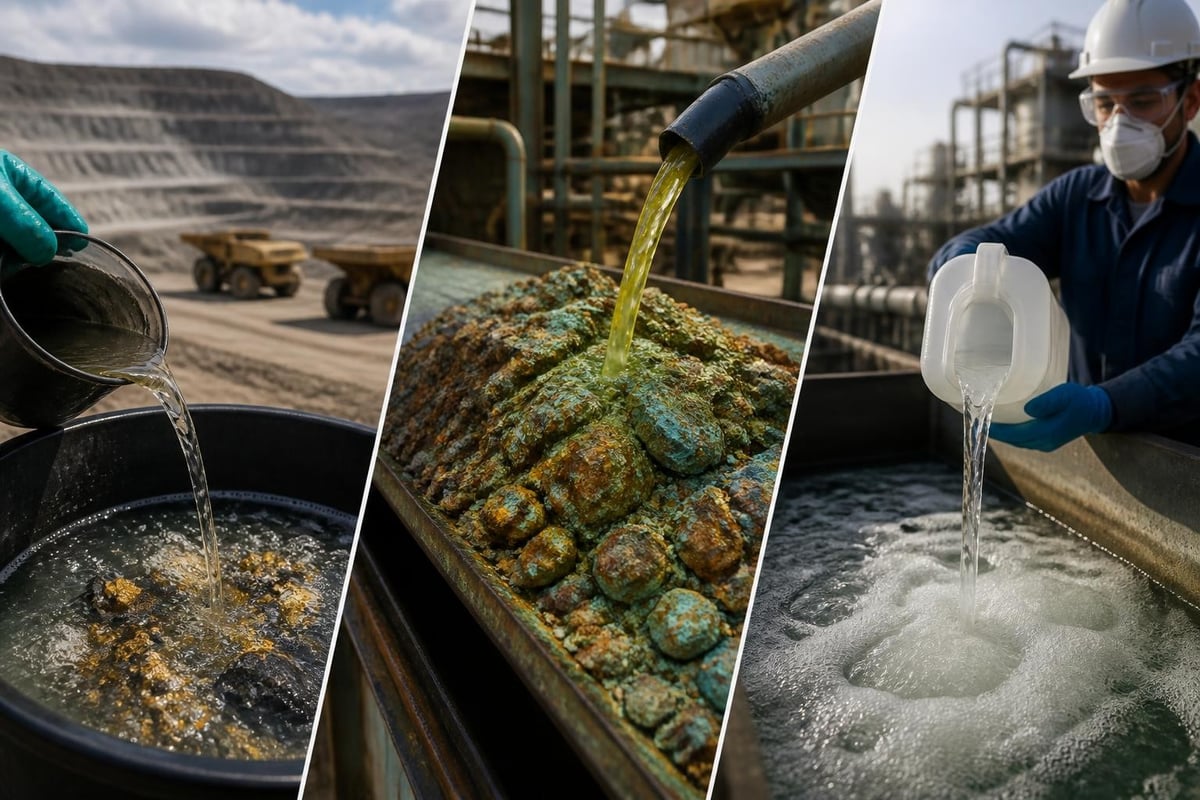
pH control is fundamental to flotation selectivity, reagent stability, and leaching kinetics. Most chemicals in mining perform optimally within specific pH ranges, making pH modifiers essential to circuit performance.
Caustic Soda for Alkaline Conditions
Caustic soda (sodium hydroxide) raises pH in flotation circuits, activates mineral surfaces, and creates the alkaline conditions necessary for many collectors and frothers to function effectively. Most sulfide flotation occurs between pH 8 and 11, requiring caustic addition to counteract natural ore acidity.
Gold leaching circuits use caustic soda to maintain the pH above 10, ensuring cyanide stability and preventing the formation of toxic hydrogen cyanide gas. The caustic requirement increases with acid-consuming minerals in the ore and must be carefully balanced against operating costs.
Operations should source caustic soda with consistent specifications and minimal impurities to avoid introducing contaminants that could interfere with downstream processes. Bulk supply arrangements with reliable logistics are essential given the high consumption rates at most mining operations.
Lime Products for pH Adjustment
Hydrated lime and quicklime offer more economical pH adjustment than caustic soda for high-tonnage applications. Many operations use lime for primary pH control and reserve caustic for fine adjustments or specific process requirements.
Lime also serves as a depressant for certain gangue minerals in flotation, helping improve concentrate grade. Pyrite depression with lime is common in copper flotation circuits targeting high copper grades with low iron contamination.
The quality of lime products varies considerably between suppliers, affecting dissolution rates, impurity levels, and overall process performance. Sodium metabisulphite works alongside pH modifiers as an oxygen scavenger and sulfidizing agent in precious metal flotation circuits.
Hydrogen Peroxide and Oxidizing Agents
Hydrogen peroxide functions as an oxidizing agent in certain metallurgical processes, including refractory gold ore pretreatment and tailings treatment. Its decomposition to water and oxygen makes it environmentally benign compared to alternative oxidants.
Some copper operations use hydrogen peroxide in atmospheric leaching circuits to accelerate dissolution kinetics. The chemical also finds application in mine water treatment for oxidizing dissolved metals before precipitation or neutralization.
Mine Water Treatment Chemicals
Mining operations generate significant volumes of process water and contact water requiring treatment before discharge or recycle. Chemicals in mining extend beyond mineral processing to encompass comprehensive water management programs.
Coagulants and Flocculants
Poly aluminum chloride (PAC), ferric chloride, and aluminum sulfate function as coagulants, destabilizing suspended particles in mine water. These chemicals neutralize surface charges, allowing particles to aggregate for removal through settling or filtration.
Anionic, cationic, and non-ionic flocculants bridge between coagulated particles, forming larger flocs that settle more rapidly. Proper flocculant selection depends on particle characteristics, water chemistry, and settling equipment design.
Tailings management represents a major application for flocculants, with large operations consuming hundreds of tonnes monthly. The chemistry of tailings storage facilities influences long-term stability and environmental performance, making water treatment chemical selection a critical consideration.
Acid Mine Drainage Management
Abandoned and active mining operations can generate acid mine drainage (AMD) when sulfide minerals oxidize and produce sulfuric acid. AMD treatment requires neutralizing agents, metal precipitants, and often biological or chemical oxidation steps.
Lime, limestone, and caustic soda neutralize acidity, while sodium sulfide or sulfate-reducing bacteria precipitate dissolved metals. Operations planning for closure must consider long-term AMD treatment chemistry and costs in their life-of-mine planning.
Evaluating Chemical Suppliers for Mining Operations

Selecting chemical suppliers involves far more than comparing unit prices. Mining operations require partners who understand metallurgical requirements, maintain consistent product quality, and deliver reliably to remote locations.
Quality and Specifications
Every chemical used in mining should meet documented specifications for purity, concentration, and critical impurities. Suppliers should provide certificates of analysis (COAs) with each delivery, enabling operations to verify product quality before use.
Request detailed product specifications before trial shipments
Verify analytical methods used for quality control testing
Confirm consistency between batches through COA review
Establish acceptable ranges for critical parameters
Implement receiving inspection protocols for incoming chemicals
Metallurgical performance depends on chemical consistency. Variations in xanthate purity or caustic concentration can destabilize flotation circuits, reduce recovery, or increase reagent consumption. Quality documentation provides the foundation for troubleshooting performance issues.
Packaging and Handling
Bulk chemical delivery reduces packaging waste and handling costs compared to smaller containers. Operations with adequate storage capacity should negotiate bulk supply agreements for high-consumption chemicals.
Chemical Type | Common Packaging | Storage Considerations |
|---|---|---|
Liquid reagents | Bulk tankers, IBCs, drums | Heated storage for viscous products |
Solid collectors | 25kg bags, 500kg jumbo bags, bulk truck | Moisture-proof storage |
Oxidizers | Approved containers per regulations | Segregated storage, ventilation |
Acids/bases | Bulk tanks, ISO tanks | Corrosion-resistant materials |
Proper packaging prevents product degradation during transport and storage. Xanthates, for example, decompose when exposed to moisture and should arrive in moisture-barrier bags with desiccants for longer shelf life.
Supply Reliability and Logistics
Mining operations cannot afford chemical stockouts that force production curtailments. Supplier evaluation must consider production capacity, inventory holdings, logistics capabilities, and backup supply arrangements.
Questions to ask potential suppliers include:
What is your production or inventory capacity for this chemical?
What lead times should we expect for routine and emergency orders?
Do you maintain safety stock for critical mining chemicals?
What logistics partners do you use for delivery to mining locations?
Can you supply multiple sites from a single agreement?
What happens if your primary source becomes unavailable?
Operations in remote locations should favor suppliers with established logistics networks and experience delivering to mining sites. Road conditions, seasonal access limitations, and security considerations all affect supply reliability in African mining regions.
Technical Support and Expertise
The best chemical suppliers understand metallurgical processes and can provide technical support beyond simple product delivery. This expertise becomes particularly valuable during process optimization, ore body transitions, or troubleshooting campaigns.
Look for suppliers who offer:
Metallurgical expertise relevant to your ore type and process
Laboratory testing capabilities for reagent optimization
On-site technical service and process audits
Training for operational staff on chemical handling and dosing
Access to manufacturer technical resources and specialists
Chemical sourcing and supply partnerships that include technical collaboration deliver more value than transactional relationships focused solely on price.
Regulatory Compliance and Documentation
Chemicals in mining must comply with national regulations governing hazardous materials, workplace safety, environmental protection, and international transport. Suppliers should provide safety data sheets (SDS), regulatory compliance documentation, and support for regulatory reporting obligations.
The International Labour Organization’s assessment of chemical exposures in mining highlights the importance of proper chemical management, worker protection, and regulatory compliance across mining operations globally.
Verify that suppliers can provide:
Current safety data sheets in required languages
Regulatory compliance certificates for their products
Support for hazardous waste classification and reporting
Guidance on transportation regulations and documentation
Product stewardship information for lifecycle management
Operations subject to TSCA Chemical Data Reporting in the United States should understand their obligations regarding substances from metal mining activities and work with suppliers who can support compliance.
Health, Safety, and Environmental Considerations
Responsible chemical management protects workers, communities, and the environment while ensuring operational sustainability. Mining operations must implement comprehensive chemical management systems covering procurement, storage, handling, use, and disposal.
Occupational Health Programs
Many chemicals in mining present inhalation, skin contact, or ingestion hazards requiring engineering controls, personal protective equipment, and medical surveillance programs. Cyanide, acids, caustics, and organic solvents demand particular attention.
Operations should establish:
Chemical-specific safe work procedures
Personal protective equipment requirements
Emergency response protocols for spills and exposures
Medical surveillance for workers handling high-risk chemicals
Training programs covering hazard recognition and controls
Regular industrial hygiene monitoring confirms that exposure controls remain effective and workers operate within safe exposure limits.
Environmental Management
Chemical losses to the environment through spills, leaks, or inadequate containment can trigger regulatory violations, community concerns, and ecosystem damage. Robust environmental management systems prevent releases and ensure rapid response when incidents occur.
Secondary containment, leak detection systems, and regular integrity inspections protect against accidental releases. Proper treatment of process water and hazardous waste classification ensure compliant disposal of chemical-containing waste streams.
Sourcing Strategies for African Mining Operations
Mining companies across South Africa, Zimbabwe, Zambia, the DRC, and other African nations face unique sourcing challenges including import logistics, currency fluctuations, and supplier network limitations. Effective sourcing strategies balance cost, reliability, and risk.
Local vs. International Sourcing
Local chemical suppliers in South Africa offer advantages including shorter lead times, reduced logistics complexity, local currency transactions, and easier quality resolution. However, the local production base may not cover all required chemicals, necessitating international procurement for specialty reagents.
A hybrid strategy often works best: source high-volume commodity chemicals locally where possible, while establishing relationships with international suppliers for specialty products unavailable from local sources. Nwans Chemicals serves as a bridge, providing access to both local production and international chemical sourcing with coordinated logistics and documentation.
Inventory Optimization
Chemical inventory represents tied-up capital but provides buffer against supply disruptions. Optimal inventory levels balance carrying costs against stockout risks and vary by chemical shelf life, supply reliability, and consumption criticality.
High-consumption, stable chemicals with reliable supply may operate on shorter inventory cycles, while specialty reagents with long lead times or critical process importance justify higher safety stocks. Consignment inventory arrangements with suppliers can reduce working capital requirements for certain chemicals.
Frequently Asked Questions
What are the most critical chemicals in mining operations?
The most critical chemicals vary by operation type, but typically include flotation collectors (xanthates), frothers (pine oil or MIBC), pH regulators (lime, caustic soda), leaching agents (sodium cyanide for gold, sulphuric acid for copper), and water treatment chemicals (flocculants, coagulants). Each plays an essential role in mineral recovery, process control, or environmental compliance.
How do I ensure consistent chemical quality for my mining operation?
Require detailed specifications and certificates of analysis from your supplier for every delivery. Implement receiving inspection protocols to verify critical parameters before use. Establish quality agreements that define acceptable ranges, testing methods, and corrective actions for out-of-specification material. Partner with suppliers who maintain rigorous quality control and can demonstrate batch-to-batch consistency.
What factors should I consider when switching chemical suppliers?
Evaluate product quality and specifications, supply reliability and capacity, technical support capabilities, pricing and payment terms, logistics and delivery performance, regulatory compliance documentation, and references from similar operations. Conduct qualification trials with new suppliers before full conversion to verify metallurgical performance matches your current reagent program. Never compromise on quality to achieve marginal cost savings.
How can I reduce chemical costs without impacting recovery?
Optimize reagent dosing through systematic test work and process control improvements. Investigate alternative reagents that may offer better performance-to-cost ratios for your specific ore. Implement bulk purchasing agreements for high-volume chemicals. Improve storage and handling to minimize product degradation and waste. Work with suppliers who provide technical support to identify optimization opportunities. Small improvements in reagent efficiency often generate larger savings than aggressive price negotiations.
What are the key safety considerations for chemicals in mining?
Implement comprehensive chemical management systems covering procurement, storage, handling, use, emergency response, and disposal. Provide appropriate personal protective equipment and ensure worker training. Maintain safety data sheets and make them accessible to all workers. Design facilities with secondary containment, ventilation, emergency eyewash/shower stations, and spill response equipment. Conduct regular safety audits and update procedures based on incident investigations and industry best practices. For high-risk chemicals like cyanide, follow international management codes and obtain third-party certification where applicable.
How do artisanal mining operations manage chemical risks differently?
Artisanal and small-scale gold mining (ASGM) operations face unique challenges with chemicals, particularly mercury, due to limited resources, informal operating structures, and minimal regulatory oversight. The WHO and Minamata Convention provide frameworks for developing public health strategies to reduce chemical exposures in ASGM, focusing on awareness, safer alternatives, and community-level interventions rather than industrial-scale controls.
What documentation should I expect from a reputable mining chemical supplier?
Reputable suppliers provide safety data sheets, certificates of analysis for each batch, product technical data sheets, regulatory compliance certificates, handling and storage guidelines, emergency response information, and quality assurance documentation. For regulated chemicals, expect additional documentation covering transportation classifications, environmental permits, and chain-of-custody records. Suppliers should also support your internal compliance requirements with customized documentation as needed.
The strategic management of chemicals in mining directly impacts operational efficiency, metal recovery, environmental performance, and worker safety across African mining operations. Understanding chemical categories, applications, and sourcing considerations enables procurement managers and metallurgists to optimize reagent programs while managing costs and risks effectively. Nwans Chemicals partners with mining operations throughout South Africa and beyond, offering reliable chemical sourcing, quality products, technical expertise, bulk supply capabilities, and logistics solutions tailored to the unique demands of mineral processing and mine water management.
Leave A Comment