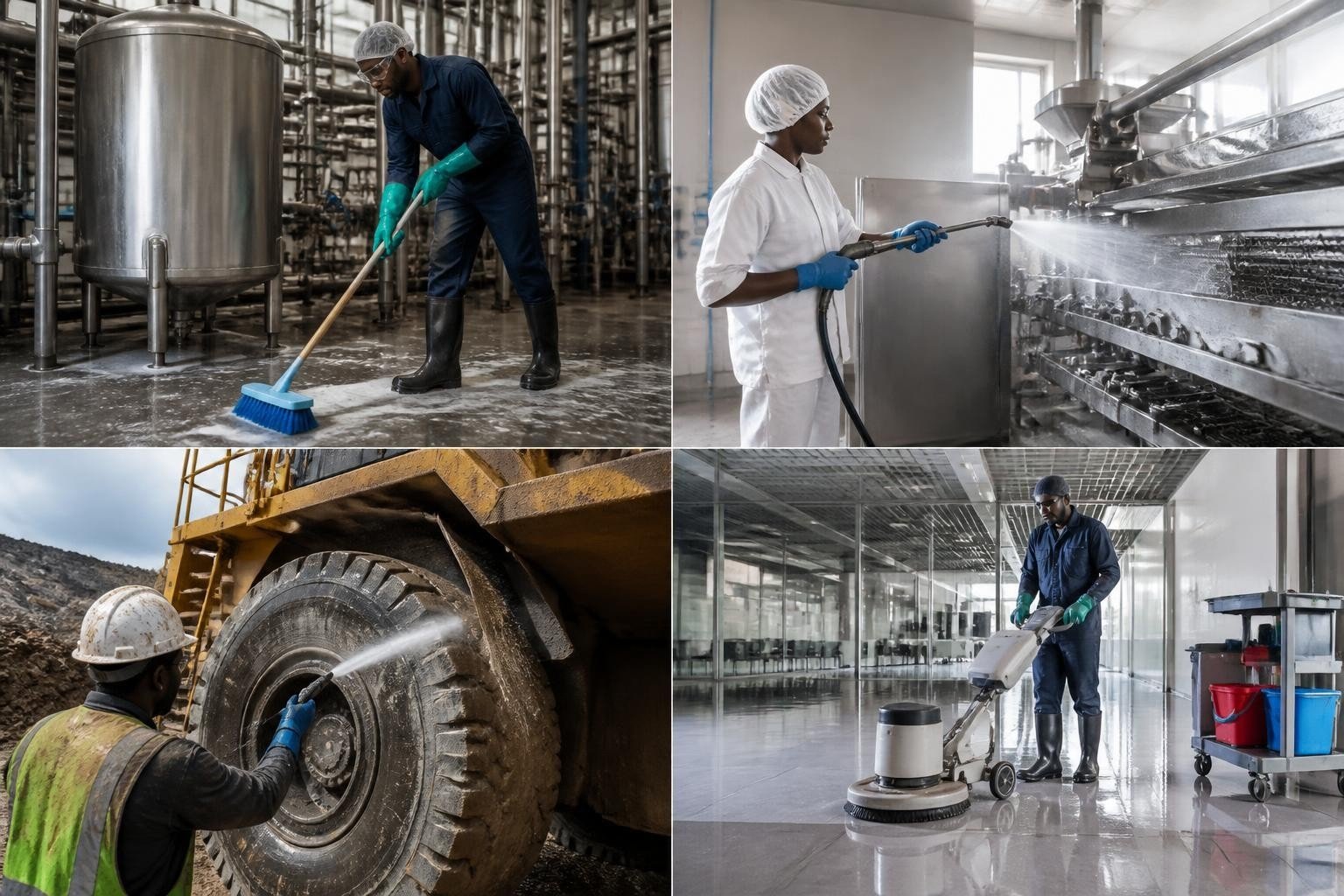
Industrial cleaning products form the backbone of hygiene, safety, and operational efficiency across manufacturing plants, mining facilities, food processing operations, and commercial buildings throughout South Africa and global markets. These specialized chemical formulations address challenges far beyond the scope of consumer-grade cleaners, delivering targeted performance against industrial soils, process residues, scale deposits, and contamination in environments where cleanliness directly impacts product quality, worker safety, and regulatory compliance. Understanding the landscape of industrial cleaning products, their chemical composition, application protocols, and procurement considerations enables businesses to optimize cleaning operations while managing costs and environmental responsibilities.
Categories of Industrial Cleaning Products
Industrial cleaning products encompass a broad spectrum of chemical formulations, each engineered for specific substrates, soils, and operational conditions. The selection depends on factors including surface compatibility, soil type, water quality, temperature requirements, and environmental constraints.
Alkaline Cleaners and Degreasers
Alkaline cleaning products represent the largest category in industrial applications, effective against organic soils, oils, greases, and protein-based residues. These formulations typically contain caustic soda (sodium hydroxide), soda ash, silicates, phosphates, or specialty alkaline builders that elevate pH levels to break down fats and oils through saponification.
Common alkaline industrial cleaning products include:
- Heavy-duty caustic degreasers for equipment and machinery
- Moderate alkaline cleaners for food processing surfaces
- Low-foam formulations for automated cleaning systems
- Metal-safe alkaline cleaners for aluminum and soft metals
Manufacturing facilities rely on alkaline cleaners for removing cutting oils, hydraulic fluids, and carbon deposits from machinery. Food processing plants use food-grade alkaline formulations to eliminate fats, proteins, and biofilms from stainless steel surfaces. The strength of alkaline cleaners ranges from pH 9 (mild) to pH 14 (caustic), with selection based on soil severity and substrate sensitivity.
Acid-Based Cleaning Solutions
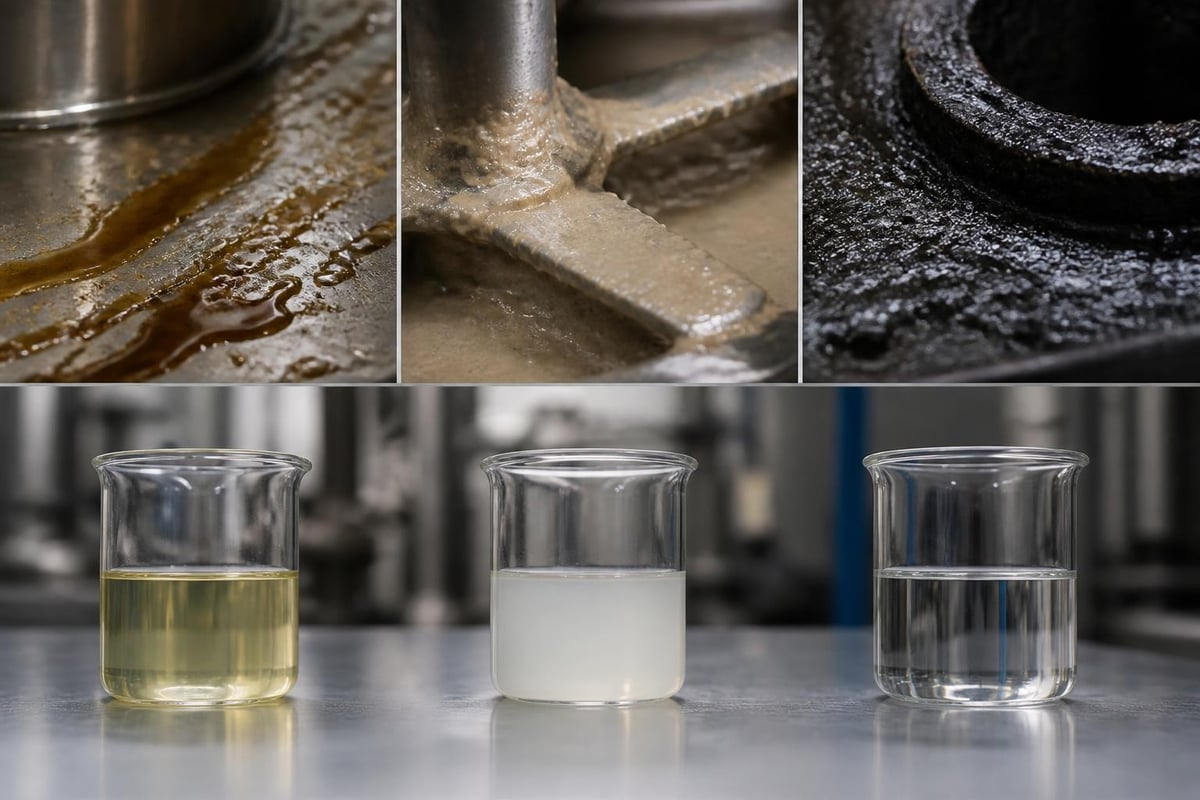
Acid cleaners tackle mineral deposits, scale, rust, oxidation, and inorganic residues that alkaline products cannot effectively remove. These formulations utilize hydrochloric acid, phosphoric acid, sulfamic acid, citric acid, or specialized organic acids to dissolve mineral-based soils and restore surface cleanliness.
| Acid Type | Primary Applications | Typical Concentration | Substrate Compatibility |
|---|---|---|---|
| Hydrochloric Acid | Scale removal, concrete etching | 10-33% | Stainless steel, concrete (with inhibitors) |
| Phosphoric Acid | Rust removal, metal preparation | 25-85% | Ferrous metals, stainless steel |
| Sulfamic Acid | Descaling, water treatment equipment | 8-15% | Most metals, plastics |
| Citric Acid | Food-grade descaling, mild rust removal | 5-30% | Food contact surfaces, aluminum |
Industrial facilities use acid cleaners in cooling tower maintenance, boiler descaling, reverse osmosis membrane cleaning, and metal surface preparation. Mining operations deploy acid formulations for equipment decontamination and mineral processing equipment maintenance. The EPA’s strengthened standards for cleaning products influence formulation trends toward safer acid alternatives in certain applications.
Solvent-Based and Emulsion Cleaners
Solvent cleaners dissolve oils, greases, adhesives, and organic residues that resist water-based formulations. These industrial cleaning products contain hydrocarbon solvents, glycol ethers, terpenes (such as d-limonene from citrus), or pine oil, either as neat solvents or emulsified in water-based systems.
Emulsion cleaners combine solvents with surfactants and water to create stable mixtures that deliver solvent power with easier rinsing and reduced flammability compared to pure solvents. Manufacturing plants use solvent cleaners for precision parts cleaning, paint removal, and adhesive elimination, while maintenance teams apply them to degrease motors, gearboxes, and hydraulic systems.
Pine oil-based cleaners offer a renewable, biodegradable solvent option for industrial degreasing and are commonly used in mining flotation processes as well as cleaning applications. The dual functionality makes these products particularly valuable in operations where chemical inventory consolidation reduces procurement complexity.
Industrial Cleaning Product Applications by Sector
Different industries face unique cleaning challenges that drive specific industrial cleaning products requirements, formulation preferences, and performance expectations.
Manufacturing and Engineering Facilities
Manufacturing operations generate diverse soils from metalworking fluids, hydraulic oils, process residues, and particulate contamination. Industrial cleaning products in these environments must remove soils without damaging precision machinery, leaving residues that interfere with subsequent processes, or creating safety hazards.
Key cleaning applications include:
- CIP (Clean-in-Place) systems that circulate cleaning solutions through process equipment without disassembly
- Parts washing with alkaline or solvent cleaners in manual or automated systems
- Floor cleaning with degreasers and general-purpose alkaline formulations
- Maintenance cleaning for equipment, conveyors, and production tools
The ISSA Manufacturing resources provide industry-specific guidance on selecting industrial cleaning products for manufacturing environments, emphasizing safety, efficiency, and quality outcomes.
Food and Beverage Processing
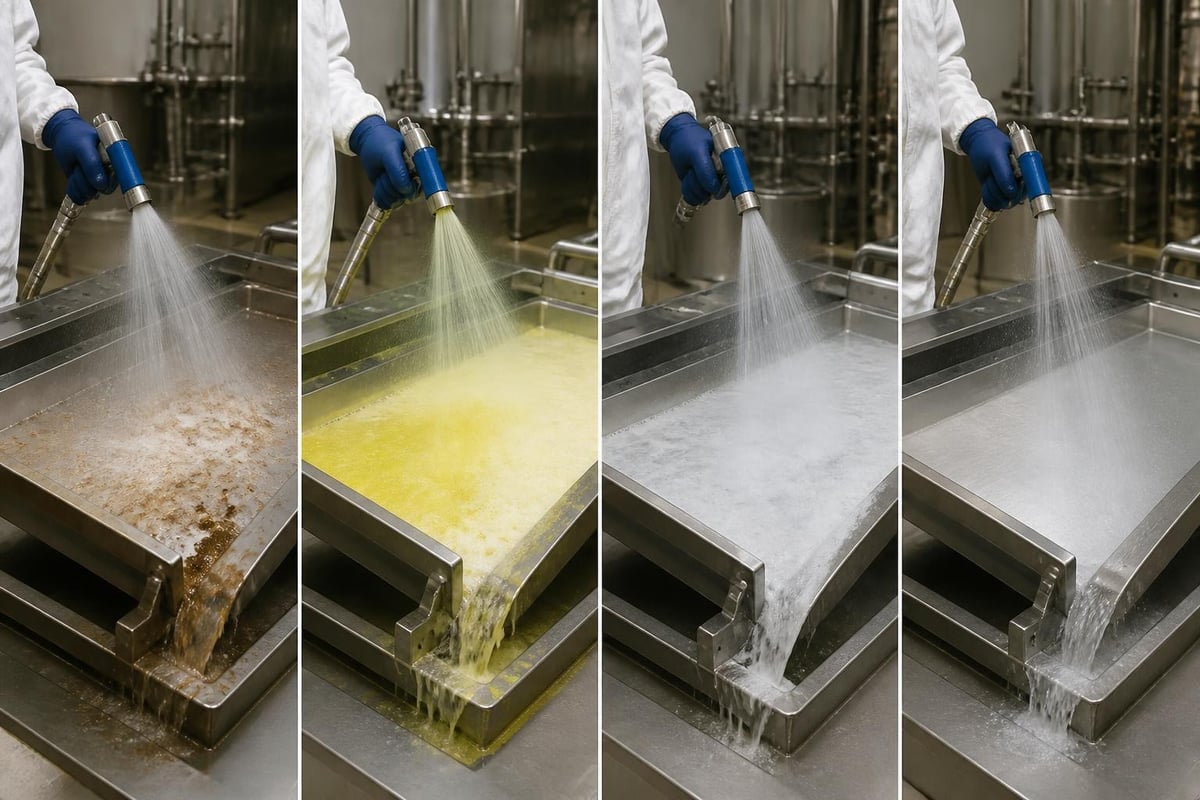
Food processing facilities require industrial cleaning products that meet stringent food safety standards while delivering effective soil removal and sanitation. Cleaning protocols typically follow a multi-step process: pre-rinse, alkaline cleaning, acid rinse (if needed), and sanitization.
Food-grade formulations avoid toxic ingredients, use approved surfactants and builders, and comply with regulatory standards from bodies such as the South African National Standards (SANS) and international food safety frameworks. These industrial cleaning products must remove proteins, fats, sugars, and biofilms while remaining compatible with stainless steel, food-grade plastics, and rubber gaskets.
Caustic soda solutions remain the workhorse alkaline cleaner in food processing, often supplemented with chelating agents, surfactants, and sequestrants to enhance performance in hard water conditions. Acid cleaners containing phosphoric or nitric acid address mineral scale and water spotting on processing equipment.
Mining and Mineral Processing
Mining operations face extreme cleaning challenges from mineral dusts, slurries, diesel residues, and process chemicals. Industrial cleaning products in mining applications must perform in harsh conditions with variable water quality, high mineral content, and exposure to extreme temperatures.
Equipment cleaning in mining includes wash-down of mobile equipment, decontamination of processing machinery, and maintenance of water treatment systems. The combination of heavy soils and operational scale demands concentrated formulations with robust performance across wide dilution ranges. Many mining facilities leverage chemicals already on-site, such as caustic soda, which serves dual roles in mineral processing and equipment cleaning, optimizing inventory and procurement efficiency.
Hospitality and Commercial Facilities
Hotels, hospitals, educational institutions, and office complexes require industrial cleaning products that balance performance, safety for custodial staff, occupant health, and environmental responsibility. These sectors increasingly prioritize green cleaning programs, third-party certifications, and reduced chemical exposure.
Commercial cleaning operations favor multi-surface formulations, concentrated products that reduce packaging waste, and systems designed for ease of use with proper dilution control. The shift toward safer chemistry reflects both regulatory pressures, such as the Biden-Harris administration’s PFAS reduction initiatives, and market demand for healthier indoor environments.
Evaluating Industrial Cleaning Product Suppliers
Procurement decisions for industrial cleaning products extend beyond price per liter to encompass supplier reliability, technical support, quality consistency, and supply chain capabilities. Businesses in South Africa and across African markets should apply comprehensive evaluation criteria when selecting chemical partners.
Product Quality and Documentation
Reputable suppliers provide complete technical documentation including Safety Data Sheets (SDS), Technical Data Sheets (TDS), product specifications, and certificates of analysis. This documentation enables informed handling decisions, regulatory compliance, and verification that products meet performance requirements.
Essential supplier documentation includes:
- Current SDS with hazard classifications and emergency procedures
- TDS with concentration, pH, density, and application instructions
- Batch certificates confirming product specifications
- Regulatory compliance statements for relevant standards
Quality suppliers maintain consistent formulations between batches, use traceable raw materials, and implement quality control testing. This consistency prevents cleaning failures, equipment damage, and operational disruptions that result from variable product performance.
Bulk Supply and Packaging Options
Industrial operations require reliable access to cleaning chemicals in appropriate quantities and packaging formats. Supplier capabilities should match operational scale, from small manufacturing facilities to large mining complexes and multi-site enterprises.
| Packaging Format | Typical Applications | Volume Range | Logistics Considerations |
|---|---|---|---|
| Drums (plastic/steel) | Medium-volume facilities, multiple products | 200-210 liters | Forklift handling, drum disposal/return |
| IBC Totes | High-volume single products, automated systems | 1,000 liters | Loading bay access, tote return programs |
| Bulk tankers | Very high volume, dedicated storage | 10,000+ liters | Tank storage, safety systems, local regulations |
| Small containers | Testing, specialty applications, small facilities | 5-25 liters | Manual handling, shelf storage |
Suppliers offering flexible packaging reduce inventory complexity and optimize storage footprints. Bulk supply programs with scheduled deliveries prevent stock-outs while minimizing storage requirements, particularly valuable for operations with limited chemical storage capacity.
Technical Support and Application Expertise
Industrial cleaning products require proper application protocols to deliver optimal results while ensuring safety and cost-efficiency. Suppliers providing technical support help customers select appropriate products, optimize dilution rates, troubleshoot cleaning failures, and implement best practices.
Value-added supplier services include on-site assessments, cleaning procedure development, staff training, and periodic performance reviews. This expertise proves particularly valuable when transitioning between products, addressing new soils, or optimizing cleaning costs without compromising results.
The IEST recommended practices for cleanroom housekeeping demonstrate the depth of technical knowledge required for specialized cleaning environments, underscoring the importance of supplier expertise in demanding applications.
Pricing, Payment Terms, and Total Cost
While unit pricing influences purchasing decisions, total cost of ownership provides a more complete picture. Factors affecting total cost include product concentration (affecting cost per use), application efficiency (reducing waste), performance (minimizing repeat cleaning), and logistics costs.
Competitive pricing structures should include:
- Transparent base pricing with volume discounts
- Flexible payment terms aligned with business cash flow
- Stable pricing or contractual protections against volatility
- No hidden fees for delivery, documentation, or technical support
Long-term supplier relationships often yield better total value than transactional, lowest-price procurement approaches. Reliable suppliers invest in customer success, recognizing that effective cleaning programs drive repeat business and referrals.
Supply Chain Reliability and Logistics
Uninterrupted access to industrial cleaning products prevents operational disruptions, quality failures, and safety incidents. Supplier evaluation should assess inventory depth, supply chain redundancy, delivery capabilities, and contingency plans for demand spikes or supply disruptions.
For South African businesses, ideal suppliers maintain local inventory, understand regional logistics challenges, and offer flexible delivery scheduling. International sourcing capabilities provide access to specialized products while local distribution ensures responsive service and reduced lead times.
Environmental and Safety Considerations
Modern industrial cleaning product selection increasingly incorporates environmental impact, worker safety, and sustainability metrics alongside traditional performance and cost factors. These considerations reflect regulatory requirements, corporate responsibility commitments, and stakeholder expectations.
Regulatory Compliance and Chemical Safety
Industrial cleaning products must comply with chemical regulations including registration, labeling, handling, and disposal requirements. South African operations follow national chemical legislation while multinational companies may apply global standards or customer-specific requirements.
Key compliance areas include:
- Chemical registration and inventory reporting
- Hazard classification and labeling systems
- Occupational exposure limits and protective equipment
- Waste disposal and environmental discharge regulations
The growing focus on persistent chemicals, particularly PFAS (per- and polyfluoroalkyl substances), influences formulation trends. Research published in peer-reviewed journals highlights PFAS environmental persistence and management challenges, driving procurement preferences toward PFAS-free formulations where performance allows.
Sustainability and Green Cleaning Programs
Environmental sustainability initiatives drive demand for industrial cleaning products with reduced ecological footprints. Green cleaning programs emphasize biodegradable formulations, concentrated products reducing packaging waste, renewable ingredients, and third-party environmental certifications.
Businesses implementing sustainability programs evaluate suppliers on:
- Biodegradability and aquatic toxicity profiles
- Renewable versus petroleum-based ingredients
- Concentrate formats reducing transportation emissions
- Recyclable or returnable packaging systems
- Third-party certifications (ecolabels, sustainable sourcing)
Balancing environmental goals with performance requirements remains essential. Industrial applications often demand chemical performance levels that environmentally-preferred alternatives cannot yet match, requiring pragmatic trade-off decisions based on specific use cases.
Frequently Asked Questions
What is the difference between industrial and commercial cleaning products?
Industrial cleaning products are formulated for heavy-duty soils, process residues, and harsh operating conditions found in manufacturing, processing, and industrial environments. They typically contain higher active ingredient concentrations, specialized chemistry for specific substrates, and meet technical performance requirements beyond commercial cleaning needs. Commercial products target lighter soils in offices, hospitality, and institutional settings with emphasis on user safety and multi-surface versatility.
How do I determine the right dilution ratio for concentrated industrial cleaning products?
Dilution ratios depend on soil severity, water hardness, application method, and surface type. Always start with supplier-recommended ratios from technical data sheets, then adjust based on cleaning results. Heavier soils require stronger concentrations; lighter maintenance cleaning uses more dilute solutions. Automated dispensing equipment ensures consistent dilution and prevents waste from over-concentration or cleaning failures from under-dilution.
Can alkaline and acid cleaners be mixed or used together?
Never mix alkaline and acid cleaners directly, as this creates violent chemical reactions, heat generation, and potentially dangerous fumes. In sequential cleaning protocols (common in food processing), thoroughly rinse alkaline cleaners before applying acid products. The neutralization reaction between acids and bases wastes both chemicals and prevents effective cleaning. Always follow proper sequencing with complete rinsing between incompatible products.
What are the shelf life and storage requirements for industrial cleaning products?
Most concentrated industrial cleaning products remain stable for 12-24 months when stored properly in sealed containers, protected from temperature extremes, contamination, and direct sunlight. Diluted solutions have shorter stability (days to weeks) depending on formulation and water quality. Store chemicals in original containers with intact labels, segregate incompatible products, and follow temperature recommendations on safety data sheets. Implement first-in-first-out inventory rotation to use older stock first.
How do water treatment chemicals support industrial cleaning operations?
Water quality significantly impacts cleaning performance. Hard water reduces surfactant effectiveness, causes scale deposits, and interferes with rinsing. Water treatment chemicals such as softeners, chelating agents, and pH adjusters optimize cleaning solution performance, prevent equipment scaling, and ensure consistent results. Facilities with poor water quality may require pre-treatment systems or cleaning formulations specifically designed for high-mineral water.
What role do surfactants play in industrial cleaning products?
Surfactants reduce surface tension, enabling cleaning solutions to penetrate soils, lift contaminants from surfaces, and suspend particles in solution to prevent redeposition. Different surfactant types (anionic, nonionic, cationic, amphoteric) provide specific benefits: anionic surfactants excel at fat and oil removal, nonionic surfactants perform well in hard water and acidic formulations, cationic surfactants offer antimicrobial properties. Industrial formulations often blend multiple surfactant types to optimize performance across diverse soils and conditions.
How should industrial facilities manage cleaning chemical waste?
Proper waste management begins with minimizing waste through accurate dilution, efficient application, and right-sized quantities. Used cleaning solutions may require neutralization, treatment, or disposal through licensed waste contractors depending on chemical composition and local regulations. Segregate hazardous and non-hazardous waste streams, maintain disposal records, and ensure waste handling complies with environmental permits. Many modern formulations are designed for direct discharge to wastewater treatment systems after use, simplifying disposal.
Procurement Best Practices for Industrial Cleaning Products
Establishing systematic procurement processes for industrial cleaning products optimizes costs, ensures supply continuity, and maintains quality standards across operations.
Conducting Cleaning Chemical Audits
Regular audits identify opportunities to consolidate products, eliminate redundancies, optimize formulations, and reduce total chemical spend. Systematic reviews assess which products deliver value, which face overuse or misuse, and where alternative formulations might improve performance or reduce costs.
Audit components include:
- Inventory all cleaning products currently in use across facilities
- Document application methods, dilution rates, and usage volumes
- Evaluate performance satisfaction and identify cleaning failures
- Analyze cost per use and total annual spend by product category
- Identify consolidation opportunities and specification improvements
Chemical audits often reveal 20-40% inventory reduction opportunities through product consolidation and dilution optimization, delivering immediate cost savings while simplifying procurement and reducing storage requirements.
Building Strategic Supplier Relationships
Transactional purchasing creates missed opportunities for technical support, innovation access, and collaborative problem-solving. Strategic relationships with capable suppliers generate mutual value through shared expertise, planning visibility, and continuous improvement initiatives.
Effective supplier partnerships involve regular communication, performance feedback, joint planning for demand changes, and collaborative response to cleaning challenges. Suppliers gain demand predictability enabling better inventory management; customers receive prioritized service, technical resources, and favorable commercial terms.
Implementing Chemical Management Systems
Formal chemical management systems bring structure to procurement, inventory control, usage tracking, and safety compliance for industrial cleaning products. These systems may range from spreadsheet-based tracking to enterprise software integrating purchasing, inventory, safety data, and usage analytics.
Benefits of systematic chemical management include:
- Centralized procurement reducing maverick buying and duplicate products
- Automated reorder points preventing stock-outs
- Usage tracking identifying optimization opportunities
- Safety data availability at point of use
- Regulatory compliance documentation and reporting
Medium and large facilities benefit significantly from chemical management systems, while smaller operations achieve value through simpler tracking and standardization practices.
Selecting and procuring the right industrial cleaning products requires balancing performance, safety, cost, and reliability across diverse operational contexts. Success depends on understanding cleaning chemistry fundamentals, evaluating suppliers comprehensively, and implementing structured procurement practices that optimize total value. Whether your operation requires heavy-duty degreasers for manufacturing equipment, food-grade formulations for processing facilities, or specialized solutions for unique applications, partnering with a knowledgeable chemical supplier ensures access to quality products, technical expertise, and reliable service. Nwans Chemicals provides comprehensive chemical supply solutions for industrial operations across South Africa, offering bulk industrial chemicals, technical support, competitive pricing, and dependable delivery. Contact our team to discuss your industrial cleaning product requirements and explore how our sourcing capabilities can support your operational excellence.
Leave A Comment